How to Get Business Class Upgrades on Corporate Flights
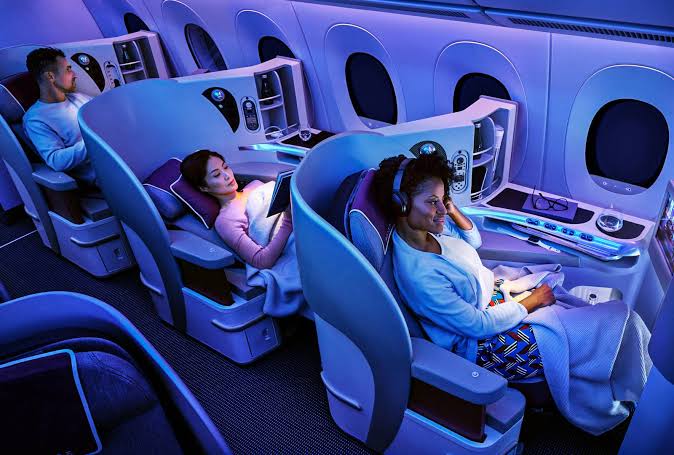
Commercial aviation operating models are built upon complex capacity-allocation matrices designed to maximize yield across diverse customer segments. When multinational enterprises deploy senior leadership, technical consultants, and deal teams across intercontinental networks, managing physical well-being alongside travel budgets becomes a high-stakes operational priority. Arriving at a destination capital after a fourteen-hour overnight flight in a restrictive economy cabin severely diminishes cognitive performance, directly impacting high-stakes merger negotiations, board presentations, and regulatory defense hearings. Securing front-cabin placement is not merely a matter of lifestyle comfort or corporate indulgence; it represents an essential physiological and productivity safeguard.
Navigating the procurement of premium seating requires looking past casual myths about airport check-in charm or spontaneous gate transactions. Mastering How to Get Business Class Upgrades on Corporate Flights demands an analytical understanding of airline inventory control systems, revenue management algorithms, elite tier clearing hierarchies, and corporate contracting leverage. Airlines treat front-cabin inventory as perishable high-value real estate. Unlocking access to these seats consistently without violating corporate travel policies or incurring unauthorized out-of-pocket expenses requires a sophisticated mastery of fare-class selection, regional alliance clearing protocols, instrument-supported bidding platforms, and institutional loyalty structures.
Evaluating institutional cabin mobility requires a rigorous analytical framework centered on inventory nesting, load factor volatility, operational irregular operations clearing logic, and the structural differences between cash-bid auctions, mileage instrument applications, and complimentary elite clearing queues. This reference guide deconstructs the systemic evolution, conceptual frameworks, operational variations, financial dynamics, and governance protocols governing commercial upgrade acquisition.
How to Get Business Class Upgrades on Corporate Flights
When evaluating How to Get Business Class Upgrades on Corporate Flights, one must first decouple public folklore from commercial reality. In popular culture, securing a front-cabin move is frequently portrayed as the result of polite demeanor at the check-in desk, stylish attire, or asking gate agents for a complimentary favor. In modern commercial aviation, however, upgrade allocation is strictly automated by sophisticated revenue management software and rigidly enforced loyalty hierarchy rules. Gate agents and check-in personnel possess virtually zero discretionary authority to grant free operational upgrades based on personal charm.
A primary source of friction for corporate travel planners is reconciling the tension between corporate travel policy restrictions and upgrade eligibility. Many corporate booking tools mandate the purchase of the lowest logical economy fare class to satisfy internal cost-control metrics. Unfortunately, deep-discount economy tickets are systematically coded by airline revenue systems as completely ineligible for mileage upgrades, cash bidding, or complimentary elite status clearing. Attempting to secure an upgrade on an un-upgradable fare class results in inevitable administrative frustration and stranded expenditures.
Furthermore, oversimplifying upgrade procurement by focusing exclusively on a single airline or a single tactical trick ignores the systemic volatility of global route networks. An upgrade strategy that succeeds consistently on high-frequency domestic trunk routes will fail entirely on heavily contested long-haul financial corridors where business-class cabins routinely sell out weeks prior to departure. A rigorous evaluation framework balances baseline fare-class selection against load factor forecasting, instrument deployment timing, alliance reciprocity, and corporate contracting leverage.
Evolution and Context of Cabin Yield Management
The commercial mechanisms governing airline cabin upgrades have evolved across three distinct eras, reflecting shifts in computer reservation systems, airline deregulation, and yield-management science.
During the regulatory era of commercial aviation prior to the late 1970s, cabin seating was largely partitioned by fixed pricing structures, and front-cabin upgrades were frequently utilized as discretionary tools by station managers to reward prominent commercial partners or handle minor overbooking scenarios. The introduction of computer reservation systems and the subsequent deregulation of route networks shifted the industry toward aggressive yield management, realizing that inventory could be dynamically priced to maximize revenue per available seat mile.
The 1990s and 2000s witnessed the institutionalization of frequent flyer programs as formal currency systems, alongside the rise of electronic ticketing. Airlines introduced standardized upgrade instruments and automated electronic clearing queues for elite status members, while corporate procurement teams negotiated volume-based upgrade clearing privileges directly into master airline contracts.
The contemporary era is defined by ancillary revenue optimization, machine-learning-driven load forecasting, and cash-based auction platforms. Facing intense pressure to monetize every square foot of aircraft real estate, carriers developed sophisticated post-booking cash-bid systems that allow economy passengers to submit financial offers for vacant business-class seats prior to departure, requiring corporate travelers to balance institutional loyalty perks against dynamic auction pricing and strict expense reporting rules.
Key Categories of Upgrade Mechanisms
Securing business class access on corporate flights involves navigating diverse operational mechanisms, each carrying distinct financial structures and trade-offs.
Complimentary Elite Clearing
Automated algorithmic status-based upgrades on eligible routes provide a zero additional financial cost advantage with automated processing, though they generally exclude long-haul international routes on most legacy carriers and face fierce elite competition.
Mileage Instrument Application and System-Wide Certificates
Redeeming frequent flyer miles combined with cash co-pays or deploying annual elite milestone certificates guarantees upgrade confirmation if specific inventory buckets are open, though they are subject to seat availability and require substantial mileage or tier balances.
Post-Booking Cash-Bid Auctions and Buy-Ups
Automated email bidding platforms and last-minute airport cash transactions at check-in kiosks make front cabins accessible to non-elite travelers, though they involve pricing volatility and zero control over clearing probability against total market demand.
Real-World Scenarios and Decision Logic
Scenario 1: The Transcontinental Board Meeting Deployment
A senior corporate officer must fly from Chicago to Los Angeles for an urgent board presentation, departing on a Monday morning flight with a full economy cabin. The corporate travel booker selects a flexible economy fare class rather than a deep-discount fare using corporate payment cards. Because the executive holds top-tier elite status, the system automatically places the traveler at the top of the electronic upgrade queue, clearing the seat 72 hours prior to departure without manual intervention.
Scenario 2: The Intercontinental Deal Finalization
A managing director travels from New York to Frankfurt to sign a multi-million-dollar acquisition agreement, requiring optimal rest during the overnight flight. Recognizing that complimentary upgrades do not apply to transatlantic routes, the traveler utilizes accumulated frequent flyer miles combined with a cash co-pay to apply for an instant upgrade instrument at the time of ticket purchase, securing confirmed business-class inventory months in advance.
Risk Landscape and Operational Failure Modes
Navigating upgrade acquisition introduces complex operational, contractual, and policy risks that can compromise corporate travel compliance.
-
The Basic Economy Fare Trap: A pervasive corporate error involves booking the absolute lowest headline fare class to satisfy strict internal cost-saving metrics, entirely overlooking the fact that the ticket is coded as non-upgradable.
-
Cabin Vacancy vs. Upgrade Inventory Illusion: Travelers frequently inspect airline seating charts online, observe empty seats in the business-class cabin, and assume an upgrade is guaranteed, ignoring that revenue management holds seats for last-minute high-fare purchasers.
-
Expense Policy Non-Compliance via Cash Bids: Submitting a post-booking cash upgrade bid using a corporate credit card without prior management approval can trigger automated expense report flags because ancillary bids code differently on statements.
Governance, Maintenance, and Strategy
For corporate travel managers and financial controllers overseeing global mobility portfolios, maintaining an optimized executive seating strategy requires continuous audits and structured review cycles.
-
Audit Fare-Class Purchasing Patterns: Review corporate booking reports to evaluate how frequently travelers purchase upgradable main cabin fares versus non-upgradable basic economy tickets.
-
Re-Evaluate Airline Contract Alignment: Assess whether annual corporate airfare volume justifies negotiating dedicated upgrade certificates or status matching provisions into carrier agreements.
-
Monitor Upgrade Clearing Success Rates: Track historical elite upgrade clearing percentages across primary corporate routes, adjusting booking timing or carrier selection accordingly.