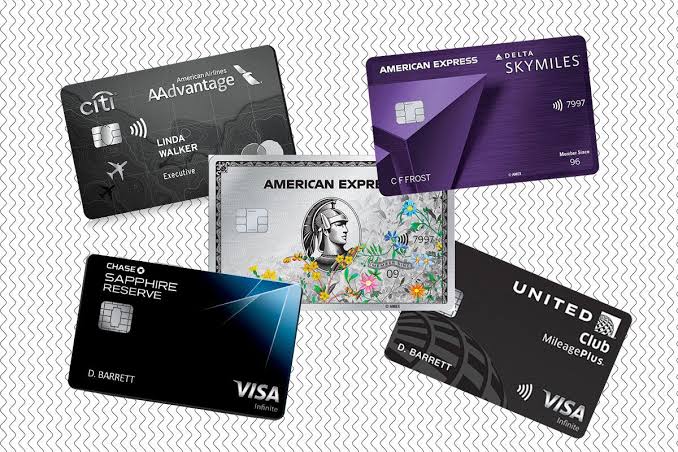
Best Premium Travel Credit Cards for Luxury Hotel Benefits

The modern travel rewards landscape has fundamentally shifted. Where card issuers once competed almost exclusively on airline miles and lounge access, the battlefield for affluent, high-spending cardholders has centered on high-end hospitality. Premium travel credit cards have transformed from simple transactional tools into operational keys that unlock structural privileges within luxury hotels—ranging from guaranteed late checkouts and daily breakfast credits to direct suite upgrades, spatial room priority, and property credits.
Evaluating these offerings requires moving past public relations headlines and surface-level marketing math. The true value of hotel benefits is rarely found in raw dollar estimates printed on card promotional materials. Instead, it lies at the intersection of contract terms, program architecture, hotel operational workflows, and loyalty program integration. A card that advertises an aggregate annual dollar value may deliver negligible returns to a traveler who prefers boutique independent resorts, while providing exponential returns to an executive who consistently books short, high-yield city stays.
Navigating this ecosystem requires an analytical understanding of how proprietary bank booking platforms (such as American Express Fine Hotels + Resorts, The Edit by Chase Travel, and the Capital One Premier Collection) interact with traditional hotel loyalty frameworks like World of Hyatt, Marriott Bonvoy, Hilton Honors, and IHG One Rewards. Understanding these interactions reveals a complex matrix of operational trade-offs, financial liabilities, and structural efficiencies that dictate the actual quality of a luxury hotel stay.
Best Premium Travel Credit Cards for Luxury Hotel Benefits
To evaluate the Best Premium Travel Credit Cards for Luxury Hotel Benefits, one must first distinguish between nominal card perks and operational execution at the hotel front desk. In marketing materials, luxury benefits are frequently presented as guaranteed enhancements. In reality, most benefits fall into two distinct operational buckets: contractually guaranteed deliverables (such as daily breakfast for two or a specific late checkout time) and space-available priority allocations (such as room upgrades or early check-in).
A common point of confusion for consumers is assuming that booking through a premium bank portal guarantees the exact same treatment as holding top-tier elite status directly with a hotel brand. While proprietary bank luxury programs negotiate dedicated benefit packages for their cardholders, the operational priority assigned to a bank portal booking versus a hotel’s own elite loyalty member varies significantly by property, occupancy levels, and revenue management strategies.
Furthermore, oversimplifying credit card selection by evaluating only the headline annual fee versus annual statement credits introduces structural inefficiencies into a travel portfolio. High annual fees often mask complex redemption mechanics—such as minimum two-night stay requirements, restricted booking channels, non-qualifying room rates, or lost hotel loyalty point accrual. A rigorous selection framework evaluates the net yield of card membership by analyzing property inclusion lists, elite status overlap, rate parity mechanics, and secondary property privileges.
Evolution and Context of Hotel Partnerships
The partnership between major banking institutions and international luxury hotel groups has evolved through three distinct operational eras over the past four decades. Early business travel rewards relied on co-branded hotel cards, which focused primarily on accumulating branded points and granting low-tier elite status within a single hotel family.
The mid-2000s marked the emergence of bank-operated luxury booking portals. Pioneered by programs like American Express Fine Hotels + Resorts (FHR), issuers recognized that high-value cardholders frequently stayed at independent luxury properties (such as Four Seasons, Rosewood, or Mandarin Oriental) that did not operate traditional points-based loyalty programs. By negotiating global contracts directly with individual luxury properties, banks established an alternative benefit layer: cardholders received VIP treatment, property credits, and room upgrades simply by booking through the bank’s portal with an eligible card.
The modern market represents an integrated, highly competitive ecosystem. Issuers like Chase (with The Edit) and Capital One (with the Premier Collection) have introduced sophisticated luxury portals designed to rival established programs. Concurrently, banks have introduced high-value flexible statement credits, expanded elite status gifting, and created hybrid earning structures where portal bookings earn elevated points multipliers. This evolution has turned credit card selection into a dynamic strategic decision.
Key Categories of Card-Based Hotel Benefits
Understanding card-based hotel programs requires categorizing the distinct mechanisms through which cards deliver value at luxury properties. Each model carries structural trade-offs regarding safety auditing, fleet uniformity, cost predictability, and service personalization.
Proprietary Bank Luxury Portals
Programs like American Express Fine Hotels + Resorts, The Edit by Chase Travel, and Capital One Premier Collection operate as specialized booking channels. They offer broad access to independent luxury brands and curated chains with standardized amenities (daily breakfast for two, $100 property credits, room upgrades, and late checkout). However, room rates listed on bank portals can occasionally carry a slight premium over non-refundable direct rates, and bookings may bypass traditional hotel loyalty elite night credits.
Direct Co-Branded Elite Status
Certain premium cards grant complimentary mid-to-high tier elite status within specific hotel loyalty programs simply for holding the card (e.g., Marriott Bonvoy Platinum Elite, Hilton Honors Diamond Elite, or IHG One Rewards Platinum Elite). Status applies across every property within that brand’s global network. The trade-off is brand lock-in: status delivers zero value when staying at independent boutique properties outside the parent brand ecosystem.
Flexible Points and Transfer Systems
Flexible rewards currencies allow cardholders to transfer points directly to hotel partners at a 1:1 ratio (such as transferring Chase points to World of Hyatt or Amex points to Marriott and Hilton). Point transfers can unlock outsized value when redeeming for aspirational properties where cash rates are extremely high. However, points availability remains subject to hotel blackout dates and peak-demand pricing tiers.
Annual Free Night Certificates and Credits
Issuers frequently offset high card annual fees by offering annual statement credits applied to hotel bookings or granting annual free night certificates. A single certificate redemption at a luxury property can easily exceed the card’s annual fee. The trade-off lies in certificate caps: high-tier luxury properties during peak season often exceed maximum certificate values, requiring cardholders to top off the certificate with additional points.
Flight & Stay Scenarios and Tactical Decision Logic
Independent Luxury Resort Stay
For a three-night stay at an independent luxury retreat costing $800 per night that does not participate in major corporate loyalty programs, utilizing a card with access to a bank luxury portal (such as Amex FHR or Chase The Edit) is optimal. Booking through the portal secures daily breakfast for two (valued at $80/day), a $100 food and beverage credit, and early check-in/late checkout privileges, outperforming generic third-party travel agency bookings.
High-Value Aspirational Award Redemption
When planning a five-night luxury vacation at a top-tier brand property (such as Park Hyatt Kyoto) where cash rates average $1,200 per night, cash payment is often inefficient. Transferring flexible points directly to World of Hyatt at a 1:1 ratio allows the traveler to redeem 35,000 to 45,000 points per night, yielding an effective redemption value well above 2.5 cents per point and saving thousands of dollars out-of-pocket.
Corporate Executive High-Frequency Transit
An executive undertaking 40 single-night stays per year across major commercial hubs often requires guaranteed late checkout for late-afternoon meetings. Holding a card that provides guaranteed 4 PM late checkout—such as the Amex Platinum card via FHR or top-tier status co-branded cards—prevents late checkout requests from being rejected during peak hotel occupancy periods.
Cost Dynamics, Rates, and Portfolio Trade-Offs
Evaluating card expenses requires looking past base annual fees to account for baseline carrying costs, credit mechanics, and opportunity spending costs.
-
American Express Platinum Ecosystem: Annual fee of $695. Offers up to $600 in annual lodging credits across Fine Hotels + Resorts and The Hotel Collection (requires 2-night minimum for THC), earning 5x Membership Rewards points on prepaid portal hotel bookings.
-
Chase Sapphire Reserve Ecosystem: Annual fee of $550. Features a $300 flexible annual travel credit alongside dedicated luxury portal perks via The Edit, earning up to 10x points on portal hotel bookings and 3x on general travel.
-
Capital One Venture X Ecosystem: Annual fee of $395. Features a $300 annual travel credit valid for Capital One Travel (including Premier Collection properties), earning 10x miles on portal hotel bookings.
-
Premium Co-Branded Hotel Cards: Annual fees ranging from $450 to $650. Feature automatic top-tier or mid-tier elite status, annual free night certificates, and elevated earning multipliers (12x to 14x) on direct hotel brand spend.
Risk Landscape, Friction Points, and Failure Modes
Utilizing premium cards for luxury hotel benefits introduces operational friction points that can compromise benefit delivery if not properly mitigated.
A common failure mode is the third-party accounting disconnect. This occurs when a luxury hotel’s property management system (PMS) misclassifies a bank portal booking as a low-tier wholesale online travel agency (OTA) booking. When this occurs, the front desk may fail to apply the contractually negotiated benefits—denying breakfast credits, omitting the $100 property amenity, and assigning undesirable room locations. To mitigate this, cardholders should retain physical or digital booking confirmations showing the specific portal program header (e.g., Amex FHR or Chase The Edit).
Additionally, property credits (such as a $100 spa or dining allowance) are subject to strict property-level restrictions. Hotels frequently exclude room rates, taxes, service charges, resort fees, and third-party vendor services from credit eligibility. A guest who applies a $100 spa credit to a treatment that incurs mandatory 25% service charges and facility fees may find that out-of-pocket costs still apply.
Conclusion and Strategic Synthesis
Selecting the Best Premium Travel Credit Cards for Luxury Hotel Benefits demands an analytical framework grounded in personal travel patterns, structural contract terms, and operational hotel realities. Surface-level calculations based on headline dollar values fail to capture the true net yield of a card portfolio. Real value is realized when card features—such as proprietary luxury portals, automatic elite status, and flexible statement credits—align directly with existing travel habits without forcing unneeded out-of-pocket spending.
Whether optimizing for independent boutique resorts through curated bank portals, transferring points to unlock aspirational award stays, or relying on co-branded cards for guaranteed operational privileges, travelers must maintain ongoing portfolio discipline. By auditing card carry costs annually, verifying pre-arrival benefit execution, and understanding property-level restrictions, cardholders can turn premium travel cards into sustainable assets that consistently enhance the luxury hotel experience.