
How Much Does a Private Jet Charter Cost? (Complete Price Guide)

The financial mechanics of private aviation are frequently obscured by marketing promises of effortless luxury and simplified hourly quotes. In practice, calculating the cost of chartering a private jet requires evaluating a multi-variable operational model governed by aviation economics, regulatory frameworks, fuel index fluctuations, and airport infrastructure constraints. A quoted base rate rarely reflects the final invoice, as variable surcharges, positioning fees, and regulatory assessments reshape the net financial outlay.
For corporate travel departments, family offices, and high-net-worth individuals, understanding these cost structures is a necessity for budget governance and risk management. Evaluating a charter quote demands analyzing not just the physical airframe, but also crew duty regulations, maintenance reserve allocations, seasonal repositioning dynamics, and flight-routing economics under Federal Aviation Administration (FAA) Part 135 rules or international equivalents like EASA Air Operations.
Navigating this marketplace involves understanding how different procurement models—ranging from dynamic on-demand charter quotes to non-equity jet card deposits, fractional shares, and full-aircraft management agreements—allocate financial risk between the charterer and the air carrier operator. This definitive price guide breaks down the structural mechanics, hidden costs, performance trade-offs, and analytical frameworks required to evaluate private jet charter expenses accurately.
How Much Does a Private Jet Charter Cost? (Complete Price Guide)
To analyze How Much Does a Private Jet Charter Cost? (Complete Price Guide), one must first dismantle the myth that private jet chartering functions like buying a point-to-point commercial ticket. Public discussions often focus on baseline hourly rates—such as $3,000 per hour for a Light Jet or $12,000 per hour for a Heavy Jet. However, in operational practice, an hourly rate is merely an initial building block within a multi-component pricing equation.
A common point of confusion for prospective charterers is treating published hourly rates as all-inclusive fees. A quote of $5,000 per hour for a Midsize Jet does not cover ground handling fees, international landing permits, Federal Excise Tax (FET), crew per diems, de-icing charges, or repositioning hours (often called “ferry legs”) required to bring an aircraft from its home base to the departure airport.
Furthermore, oversimplifying charter pricing by evaluating only the base quote introduces significant operational and financial risks. Low upfront quotes often disguise restrictive cancellation policies, older avionics packages, high peak-day premiums, or limited operational recovery guarantees when a mechanical AOG (Aircraft On Ground) disruption occurs. A comprehensive cost evaluation balances initial quoted estimates against contract terms, operator safety accreditations, and potential second-order expenses.
Evolution and Context of Business Aviation Pricing
The financial structures of private jet chartering have undergone three major systemic transformations over the past fifty years. In the early decades of business aviation, private charters operated almost exclusively under a local Fixed-Base Operator (FBO) model. Aircraft owners rented their airframes out during downtime. Pricing was simple but inefficient: charterers paid for every hour the aircraft flew, including the return leg back to the home airfield, even if the passenger only flew one-way.
The late 1980s and 1990s introduced structural disruption through fractional ownership programs and non-equity jet card products operating under FAA Part 135 regulations. By pooling large fleets of standardized aircraft across wide geographic areas, operators created Primary Service Areas (PSAs). Within a PSA, cardholders could fly one-way missions without paying repositioning charges, as the operator absorbed ferry flights into a centralized fleet logistics model.
Today’s market represents a dynamic hybrid ecosystem. Advanced digital flight-management software and real-time positioning algorithms allow charter brokers and direct operators to aggregate global fleet availability instantly. On-demand charter pricing fluctuates continuously based on fuel indices, airport slot availability, air traffic control congestion, and floating-fleet positioning. Consequently, charter pricing has evolved from static rate sheets into dynamic, market-driven financial calculations.
Key Aircraft Categories and Operational Pricing Variations
Understanding charter costs requires categorizing aircraft by performance parameters, passenger capacity, range capabilities, and hourly pricing dynamics.
Turboprops and Very Light Jets (VLJs)
Models such as the Pilatus PC-12, King Air 350, Embraer Phenom 100, and Citation Mustang seat 4 to 9 passengers with a non-stop range of 1,000 to 1,800 nautical miles. Base rates average $2,200 to $4,500 per hour. They offer the lowest operating costs and short-field access, though cabin space and speeds are limited.
Light and Midsize Jets
Models such as the Phenom 300, Citation CJ4, Hawker 900XP, and Citation XLS+ seat 6 to 8 passengers with a range of 1,800 to 3,000 nautical miles. Base rates average $4,500 to $8,500 per hour. Midsize jets introduce stand-up cabins and enclosed lavatories, providing a balanced ratio of speed to fuel consumption.
Super-Midsize and Heavy Jets
Models such as the Bombardier Challenger 350, Citation Latitude, Challenger 605, and Embraer Legacy 650 seat 8 to 12 passengers with a range of 3,200 to 4,800 nautical miles. Base rates average $8,500 to $16,000 per hour. They offer coast-to-coast and transoceanic capabilities, multi-zone cabins, and dedicated flight attendant services.
Ultra-Long-Range Jets and VIP Airliners
Models such as the Gulfstream G650, Bombardier Global 7500, Boeing BBJ, and Airbus ACJ seat 12 to 30+ passengers with a range of 6,000 to 9,000 nautical miles. Base rates average $16,000 to $50,000+ per hour. Engineered for global intercontinental missions, these airframes require dual-crew rotations and feature advanced satellite communications suites.
Flight Scenarios and Tactical Decision Logic
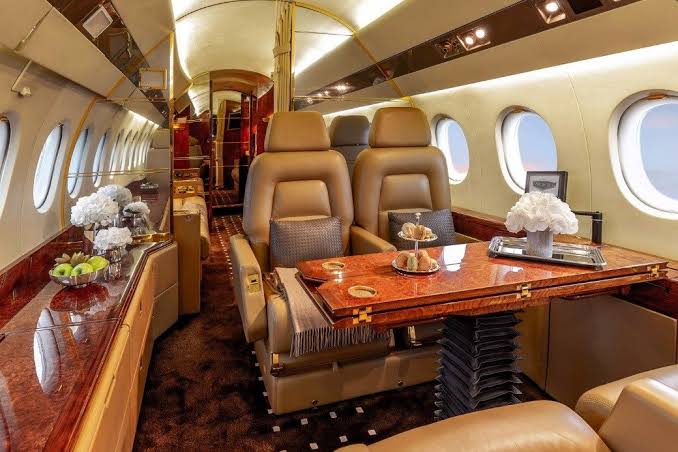
Scenario 1: One-Way Regional Executive Flight (Teterboro to Palm Beach)
For a 4-passenger one-way flight from Teterboro (KTEB) to West Palm Beach (KPBI) lasting 2.7 flight hours on a Light Jet, baseline hourly pricing ($14,850) is supplemented by taxi allowances ($1,100), 7.5% Federal Excise Tax ($1,196), segment fees ($20.80), FBO ramp handling ($650), and catering ($400). The true total invoiced cost reaches $18,216.80, demonstrating how variable inputs elevate net hourly rates above base quotes.
Scenario 2: Alpine Winter Resort Flight (Miami to Aspen with De-Icing)
A family flight from Miami (KTMB) to Aspen (KASE) during winter on a Super-Midsize Jet involves high-density altitude operational fees ($1,200) and mandatory de-icing treatment ($7,800 for Type I and IV fluids). Added to base flight time ($45,900) and taxes ($3,442.50), the invoice total reaches $60,542.50. Unexpected mountain weather can also force diversions to Eagle County, incurring secondary ground transport expenses.
Risk Landscape, Financial Friction Points, and Failure Modes
Financial exposure in private jet chartering often stems from ambiguous contract terms, operator logistics, and unexpected operational contingencies.
A major failure mode is crew duty-day exhaustion. FAA Part 135 rules cap pilot duty days at 14 consecutive hours. Unplanned ground delays caused by weather or customs clearance can push flight crews past their regulatory duty limits mid-itinerary, immediately grounding the aircraft until a fresh crew is deployed. Charter clients without contractually guaranteed recovery coverage face stranding or high last-minute re-booking fees.
Furthermore, on-demand empty leg bookings carry inherent cancellation risks. Empty legs exist only to reposition an aircraft for a primary customer. If that customer alters or cancels their itinerary, the empty leg is automatically canceled, leaving travelers without recourse or guaranteed replacement aircraft.
Conclusion and Synthesis
Determining How Much Does a Private Jet Charter Cost? (Complete Price Guide) requires an analytical evaluation process that extends beyond baseline hourly rates. The true financial commitment of private aviation is governed by aircraft selection, mission geometry, variable operational surcharges, winter risks, and the legal framework of the procurement contract.
Whether selecting on-demand charters for maximum capital flexibility, purchasing fixed-rate jet cards for predictable regional access, or investing in fractional shares for long-term fleet guarantees, travelers must evaluate options using fully burdened cost metrics. By auditing pre-flight quotes, establishing clear risk-mitigation protocols, and monitoring performance indicators, corporate travel managers and private individuals can achieve optimal balances between financial investment, travel flexibility, and operational safety.