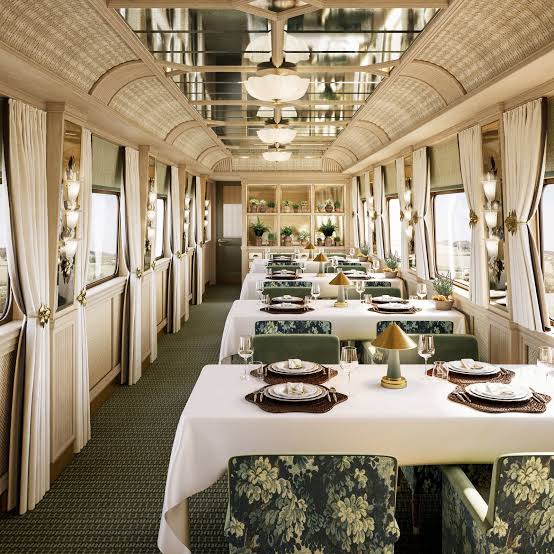
Top Luxury Train Journeys You Must Experience Once
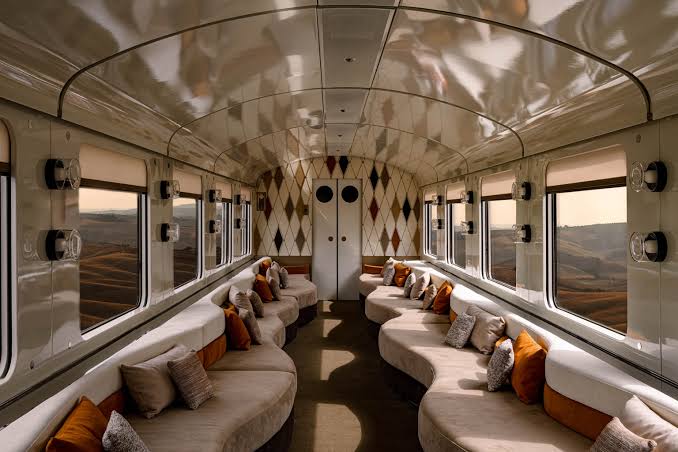
Modern passenger rail systems operate overwhelmingly as high-throughput, utility-driven transit infrastructure. Designed to optimize passenger-kilometer efficiency, minimize dwell times at urban terminals, and compress travel time across dense corridors, high-speed rail networks treat transit purely as a temporal cost to be minimized. In direct opposition to this functional paradigm sits experiential luxury rail travel. Here, rolling stock, rail corridors, and onboard hospitality are deliberately engineered to transform physical movement into the primary destination.
Experiential rail travel functions as an integrated ecosystem combining civil engineering, rolling stock preservation, haute cuisine logistics, and localized territorial access. Operating a luxury train demands navigating complex operational constraints: maintaining decades-old historic carriages to rigorous contemporary safety standards, managing tight track-access windows granted by national freight or passenger rail authorities, and executing fine dining operations inside narrow, vibrating steel carriages traveling across variable track gauges.
Evaluating the world’s premier luxury rail routes requires moving beyond superficial travel literature. A rigorous analysis demands examining how different operators navigate physical track mechanics, geographic environments, carriage restorations, onboard spatial design, and seasonal route scheduling. This comprehensive reference guide analyzes the systemic evolution, conceptual frameworks, route variations, financial dynamics, and operational risk factors governing the global luxury rail sector.
Top Luxury Train Journeys You Must Experience Once
Systematically analyzing the Top Luxury Train Journeys You Must Experience Once requires separating marketing-driven romanticism from operational and architectural reality. In general travel discourse, luxury rail is often conflated with generic high-end tourism—framed simply as a scenic train ride accompanied by fine dining. However, institutional travel designers, rail historians, and experiential logistics managers evaluate luxury rail journeys as bespoke mobile hospitality platforms that navigate severe physical, spatial, and regulatory boundaries.
A primary source of misunderstanding among travelers is failing to distinguish between restored vintage trains, purpose-built modern luxury trains, and luxury observation carriages attached to scheduled commercial trains. Restored vintage fleets—such as the Venice Simplon-Orient-Express—utilize original 1920s and 1930s Pullman and Compagnie Internationale des Wagons-Lits carriages. These offer unmatched historical authenticity, polished marquetry, and period Art Deco interiors, but operate under physical spatial constraints, including smaller cabin dimensions and, in some historical carriages, shared facilities or restricted electrical capacity.
Conversely, modern luxury trains—such as Japan’s Seven Stars in Kyushu or India’s Maharajas’ Express—are built on contemporary, wide-gauge chassis engineered specifically for spatial optimization. They incorporate full en-suite wet rooms, advanced pneumatic suspension systems, micro-climate controls, and state-of-the-art soundproofing. Evaluating luxury rail routes requires balancing an appreciation for historical heritage against expectations for cabin space, climate control, and modern private amenities.
Furthermore, evaluating journeys purely based on geographic distance leads to flawed comparisons. The true metric of a luxury train journey is route density—the ratio of scenic, historical, and cultural immersion to total transit hours—combined with track exclusivity and off-train access. A 300-mile journey through alpine passes on a dedicated private train can offer significantly higher experiential value than a 2,000-mile transit across uniform plains on a commercial rail track.
Evolution and Context of Experiential Rail Logistics
The historical trajectory of luxury rail travel reflects broader shifts in global transportation infrastructure, steel production, hospitality standards, and environmental regulation.
The genesis of luxury long-distance rail travel traces back to the late nineteenth century, driven by Belgian entrepreneur Georges Nagelmackers. Inspired by George Pullman’s sleeping cars in the United States, Nagelmackers founded the Compagnie Internationale des Wagons-Lits in 1872. This culminated in the launch of the original Orient-Express in 1883, connecting Paris to Constantinople. For the first time, long-distance international travel bypassed fragmented local stagecoaches, offering continuous steam-drawn passage featuring mahogany paneling, velvet upholstery, private sleeping berths, and multi-course gastronomic dining across European borders.
The mid-twentieth century brought severe disruption to luxury rail travel. The rapid expansion of commercial jet aviation, combined with national highway networks, rendered long-distance passenger rail economically uncompetitive for time-sensitive travelers. Legacy European and American rail operators slashed budgets, simplified dining services, and converted passenger rail into standardized state-subsidized public utility networks. Dozens of classic luxury carriages were decommissioned, sold to private collectors, or left to rust in railway sidings.
The modern revival of experiential rail travel began in the late 1970s and 1980s, spearheaded by entrepreneurs like James Sherwood, founder of Sea Containers and later Orient-Express Hotels (now Belmond). Sherwood systematically purchased vintage carriages from private collectors and auctions, painstakingly restoring them to 1920s Art Deco specifications. This restored fleet launched as the Venice Simplon-Orient-Express in 1982, establishing a commercial blueprint for luxury heritage rail. In parallel, national rail authorities in Asia, Africa, and South America recognized the economic potential of converting scenic, low-density regional rail lines into high-end land cruises, giving rise to iconic modern services like the Rovos Rail in Southern Africa, the Hiram Bingham in Peru, and the Twilight Express Mizukaze in Japan.
Key Categories of Global Luxury Trains
Luxury train journeys vary widely based on geographical terrain, gauge dimensions, carriage architecture, and service delivery systems.
Restored Vintage Heritage Fleets
Operating on European standard gauge using restored 1920s Wagons-Lits carriages, flagship trains like the Venice Simplon-Orient-Express travel primary corridors between Paris, Venice, and Istanbul. Their signature structural feature is authentic Art Deco craftsmanship, operating under the constraint of historic spatial limits.
Wide-Gauge African and Asian Land Cruises
Operating across Southern Africa on Cape gauge (3ft 6in), Rovos Rail utilizes restored vintage and custom steel carriages offering massive suite square footage and open-air rear observation balconies. Similarly, India’s Maharajas’ Express utilizes broad-gauge tracks to deliver multi-room suites and sprawling dining cars.
Contemporary Japanese Precision Fleets and Mountain Scenic Liners
Japan’s Seven Stars in Kyushu features handcrafted wood lattice paneling and glass-walled rear observation lounges, constrained primarily by lottery-based booking allocations. Meanwhile, daylight scenic liners like the Rocky Mountaineer in Canada or Belmond Hiram Bingham in Peru utilize glass-dome observation cars to maximize daytime landscape viewing without overnight onboard sleeping quarters.
Real-World Scenarios and Decision Logic
Scenario 1: The Trans-European Heritage Voyage
A couple seeking historical authenticity and classic European elegance plans a milestone celebration from Paris to Venice. They select the Venice Simplon-Orient-Express. The historical significance of original Wagons-Lits carriages, silver-service dining, and black-tie evening traditions matches their desire for 1920s glamour. Expecting modern ultra-spacious suites on a standard VSOE Historic Cabin leads to disappointment; selecting a Grand Suite mitigates spatial constraints by providing a private bathroom, double bed, and dedicated steward service while preserving historic marquetry.
Scenario 2: Remote Wilderness Exploration with High Spatial Comfort
Travelers seeking expansive landscape views, large cabin living space, and wildlife viewing across Southern Africa choose Rovos Rail’s Pretoria to Cape Town or Victoria Falls route. The generous square footage of the Royal Suites, open-air observation balcony, and slow-paced schedule provide an ideal platform for relaxing and viewing game reserves. Because slow travel speeds over regional infrastructure can lead to minor delays caused by freight train priority, the itinerary incorporates generous buffers before onward flight connections.
Planning, Cost Dynamics, and Capital Accounting
Budgeting for luxury rail journeys requires analyzing base ticket tariffs, inclusive amenity structures, local transfer logistics, and seasonal price variations.
-
Ultra-Luxury Heritage Tier (e.g., VSOE, Seven Stars): Daily rate per passenger: $3,000 – $6,000+ USD. Includes Grand Suite accommodations, personal steward service, champagne receptions, custom off-train experiences, and fully inclusive fine dining.
-
Premium Dedicated Heritage Tier (e.g., Rovos Rail, Royal Scotsman, Maharajas’ Express): Daily rate per passenger: $1,800 – $3,500 USD. Includes private en-suite cabins, open bar, guided excursions, private entry fees, and onboard fine dining.
-
Daylight Scenic Experiential Tier (e.g., Rocky Mountaineer GoldLeaf, Belmond Hiram Bingham): Daily rate per passenger: $800 – $1,800 USD. Includes glass-dome observation seats, gourmet hot lunches, open bar, and luxury land-based overnight hotel arrangements.
Risk Landscape and Operational Failure Modes
Deploying luxury train operations across shared national rail corridors introduces unique mechanical, environmental, and regulatory risks that require proactive mitigation.
-
National Track Priority Friction: Because many luxury trains operate over tracks owned by state or commercial freight authorities, unexpected signal delays or freight congestion can force luxury trains into sidings, altering planned arrival times.
-
Vintage Rolling Stock Air Conditioning Strain: Operating historic carriages equipped with retrofitted air conditioning units through extreme heatwaves can strain onboard electrical generators, potentially compromising cabin climate control.
-
Cross-Border Regulatory Bottlenecks: Traversing international borders requires multi-national engine swaps, variable electric signaling transitions, and freedom-of-movement permits that must be managed seamlessly to avoid transit delays.
Governance, Maintenance, and Strategy
Preserving historic railway carriages while complying with modern international rail safety standards requires continuous engineering maintenance and regulatory oversight.
-
Inspect Wheelset and Bogie Assemblies: Undergo mandatory ultrasonic non-destructive testing of carriage axles and wheelsets to detect micro-fractures before issuing track access clearance.
-
Verify Dual-Braking Compatibility: Ensure vintage carriages are retrofitted with modern air-braking systems fully compatible with modern electric and diesel locomotives.
-
Audit Fire Suppression and Emergency Systems: Maintain automated thermal fire suppression systems in carriage ceilings, galleys, and electrical control lockers.
Conclusion and Strategic Synthesis
Selecting from the Top Luxury Train Journeys You Must Experience Once demands an analytical perspective that balances an appreciation for historical craftsmanship against spatial engineering, route density, and track mechanics. Surface-level promotional descriptions fail to capture how different rolling stock designs, track gauges, and operational arrangements shape the traveler’s day-to-day experience.
By aligning personal travel priorities with the appropriate rail platform—selecting restored vintage fleets like the Venice Simplon-Orient-Express for historic glamour, modern wide-gauge trains like Rovos Rail or the Maharajas’ Express for expansive cabin space, or specialized engineering builds like Seven Stars in Kyushu for precise cultural immersion—travelers can experience the pinnacle of slow, experiential travel. Through disciplined planning, realistic operational expectations, and an understanding of train logistics, luxury rail travel remains one of the world’s most compelling forms of journeying.