Best Travel Insurance for Pre-Existing Medical Conditions
Navigating international travel while managing an ongoing health profile introduces a complex overlay of financial, clinical, and logistical variables. When individuals with chronic illnesses, recent surgical histories, or fluctuating physiological conditions cross national borders, standard health insurance policies typically terminate at domestic frontiers, leaving a dangerous void in emergency protection. A sudden cardiac event, an acute respiratory flare-up, or the management of an established endocrine disorder in a foreign jurisdiction can quickly generate hundreds of thousands of dollars in medical debt. Securing reliable financial protection requires navigating the specialized landscape of policies designed around pre-existing medical provisions, waiver mechanics, and look-back windows.
The commercial insurance marketplace approaches chronic health issues through highly conservative risk-assessment models. By default, standard travel insurance contracts exclude any medical condition that has exhibited symptoms, required medication adjustments, or undergone diagnostic testing within a specified period preceding policy purchase. Overcoming these exclusions requires understanding how underwriters operationalize stability, the absolute necessity of time-sensitive pre-existing condition waivers, and the structural differences between primary and secondary indemnity coverage.
Evaluating the mechanisms that define the market requires an analytical approach centered on look-back duration, non-refundable trip cost full-insurance mandates, medical evacuation caps, and the legal definitions governing stability. This reference guide deconstructs the structural mechanics, decision frameworks, financial trade-offs, and failure modes required to select and utilize coverage for pre-existing medical conditions accurately.
Best Travel Insurance for Pre-Existing Medical Conditions
To systematically evaluate the Best Travel Insurance for Pre-Existing Medical Conditions, one must first discard consumer marketing terminology and examine the precise legal definitions utilized by insurance underwriters. In everyday language, a pre-existing condition is simply any health issue a person has lived with for months or years. In underwriting practice, however, a pre-existing medical condition is defined dynamically through a retrospective review window known as the look-back period.
The look-back period is a temporal span—most commonly set at 60, 90, 120, or 180 days—immediately preceding the effective date of the insurance policy. If a traveler experienced symptoms, received a new diagnosis, consulted a physician, underwent diagnostic testing, or experienced a change in medication dosage (either an increase, decrease, or complete cessation) for a condition during that window, the condition is legally classified as pre-existing. Without a specific contractual waiver, any subsequent medical emergency, trip cancellation, or trip interruption stemming from that condition is entirely excluded from coverage.
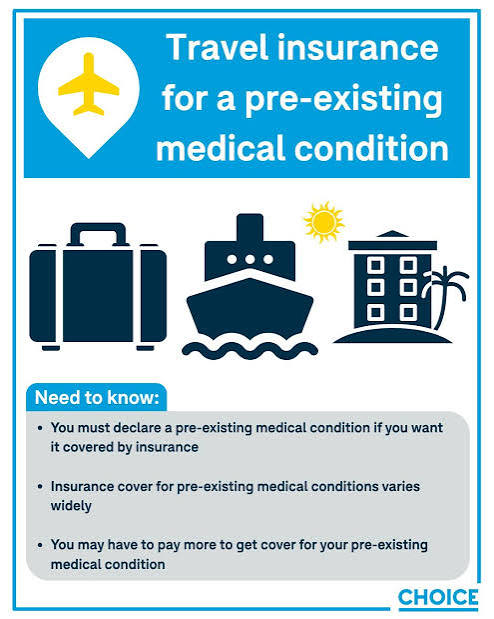
A widespread source of friction for travelers is assuming that purchasing a comprehensive travel insurance policy automatically covers all known health statuses. In reality, standard policies explicitly disclaim pre-existing ailments to protect underwriters against adverse selection—the statistical tendency of individuals with active health needs to purchase coverage precisely because they anticipate a medical event. Unlocking protection requires qualifying for a pre-existing condition waiver, a specialized contractual rider that nullifies the look-back exclusion. Securing this waiver is strictly governed by procedural gates, most notably the time-sensitive purchase window following the initial trip deposit.
Evolution of Health Risk Underwriting
The commercial mechanisms governing health risk transfer in travel insurance have evolved across three distinct eras, influenced by broader shifts in healthcare legislation, actuarial data modeling, and global demographic trends.
For much of the mid-twentieth century, travel insurance was designed primarily for young, healthy commercial travelers taking short, predictable trips. Underwriters viewed chronic illnesses as uninsurable wildcards, enforcing rigid total exclusions for any historical ailment. Senior citizens or individuals managing stable conditions like hypertension or controlled diabetes were routinely barred from securing comprehensive trip protection or forced to pay exorbitant, ad hoc premiums with minimal benefit caps.
The passage of major healthcare reforms in domestic markets created a consumer expectation of health equity. However, these domestic statutes did not apply to cross-border travel insurance. Recognizing a massive underserved market among an aging, increasingly mobile demographic, progressive underwriters introduced the pre-existing condition waiver framework. By tying the waiver to strict behavioral rules—such as buying early and insuring the entire trip cost—insurers could accurately pool risk without exposing themselves to adverse selection.
The contemporary landscape is defined by digital health declarations, algorithmic risk scoring, and specialized medical assistance networks. Modern specialty underwriters offer sophisticated policies that waive pre-existing exclusions seamlessly, provided the traveler satisfies objective stability criteria at the exact moment of policy inception.
Real-World Scenarios and Decision Logic
Scenario 1: The Stable Cardiac Patient Planning a Cruise
A traveler with a history of mild coronary artery disease, stable for three years on a fixed regimen, books an Alaskan cruise and pays an initial deposit. The traveler purchases a comprehensive policy featuring a pre-existing condition waiver within the mandatory window and declares the full trip cost. Purchasing early successfully activates the waiver, ensuring that any cardiac event onboard is fully covered rather than classified as an excluded pre-existing condition.
Scenario 2: The Recent Medication Adjustment Trap
A traveler managing hypertension visits their physician shortly before paying a trip deposit, and the physician adjusts the medication dosage to optimize control. Although insurance is purchased within the waiver window, the condition was not stable during the look-back period because a medication change occurred. Underwriters evaluate stability at the exact moment of purchase, meaning the condition remains excluded and claims related to it will be denied.
Planning, Cost Dynamics, and Capital Accounting
Budgeting for travel protection when managing medical histories requires analyzing premium multipliers, age-based pricing scales, deductible structures, and opportunity costs.
-
Standard Comprehensive with Waiver: Geared toward travelers aged 30–49 with minor stable conditions. Provides $100k medical and $250k evacuation caps. Estimated cost: $150 to $300 per trip.
-
Senior High-Limit Medical with Waiver: Geared toward travelers aged 65–75 managing chronic health profiles. Provides $250k medical and $500k evacuation caps. Estimated cost: $400 to $900 per trip.
-
Specialty Medical-Only Plan: Geared toward travelers requiring high emergency health limits ($500k+) without trip cancellation coverage. Estimated cost: $80 to $200 per trip equivalent.
-
Annual Multi-Trip Medical Plan: Geared toward frequent travelers taking multiple short trips annually. Estimated cost: $250 to $500 per year.
Risk Landscape and Operational Failure Modes
Navigating medical travel insurance introduces complex contractual hurdles. Understanding common failure points prevents claim rejections.
-
The Missing Waiver Window Trap: Failing to purchase the policy within the strict time-sensitive window (14 to 21 days from the first deposit) is the primary cause of denied medical claims. Late purchases leave pre-existing conditions permanently excluded.
-
The Physician Fitness-to-Travel Disqualification: Policies universally require that the traveler be medically fit to undertake the journey at the exact moment the insurance premium is paid. Terminally ill travelers or those awaiting major surgery are ineligible.
-
Retroactive Medical Record Audits: When a high-dollar medical claim is submitted for a pre-existing condition, underwriters routinely execute retroactive medical record audits, requesting physician notes spanning months before policy inception.
Governance, Maintenance, and Strategy
For individuals managing ongoing health profiles who travel frequently, medical risk management requires continuous protocol reviews and systematic audits.
-
Audit Health Stability Baselines: Review all chronic conditions, prescription regimens, and physician consultations over the past 180 days to confirm absolute stability before booking any new itinerary.
-
Verify Underwriter Waiver Windows: Confirm whether preferred insurance providers have modified their time-sensitive purchase windows to ensure compliance.
-
Review Medical Evacuation Limits: Ensure chosen policy caps for emergency medical transport match the geographic remoteness of upcoming travel destinations.
Conclusion and Strategic Synthesis
Selecting the optimal policy or coverage strategy for the Best Travel Insurance for Pre-Existing Medical Conditions demands a rigorous, analytical approach focused on time-sensitive waiver windows, absolute health stability verification, high medical and evacuation caps, and primary indemnity structures. Surface-level evaluations based solely on low premium pricing fail to capture how policies perform when a chronic condition flares up in a foreign hospital.
By aligning policy choices with personal health baselines—while maintaining strict adherence to initial deposit deadlines and complete trip cost declarations—travelers can transform travel insurance from an administrative uncertainty into a dependable financial safeguard. Through disciplined planning, meticulous record-keeping, and intellectual honesty regarding policy definitions, navigating international travel with a medical history becomes a manageable, highly secure operational endeavor.