Understanding “Credit Card Travel Insurance vs Standalone Travel Insurance
Modern travel risk management requires evaluating two distinct financial instruments designed to absorb unexpected itinerary disruptions: built-in credit card travel protections and dedicated, third-party standalone travel insurance policies. As global travel volumes expand and systemic logistical vulnerabilities multiply, the financial stakes of unexpected trip cancellations, medical emergencies abroad, and transit delays have grown exponentially. For corporate executives, frequent flyers, and leisure travelers alike, selecting the appropriate protection mechanism is no longer a matter of checking a simple box. It requires a rigorous, analytical understanding of contractual underwriting limits, activation triggers, jurisdictional boundaries, and indemnification structures.
The assumption that holding a premium rewards credit card provides comprehensive protection equivalent to a dedicated commercial insurance policy introduces significant financial and personal exposure. While high-fee credit cards bundle attractive supplementary travel benefits into their annual fees, these perks are fundamentally tethered to credit card loyalty programs, merchant payment requirements, and restrictive sub-limits. Conversely, standalone travel insurance operates as a heavily regulated, legally binding contract underwritten by licensed insurance carriers, offering customizable coverage designed to handle catastrophic losses, particularly in international healthcare environments.
Navigating this domain requires dissecting how these two frameworks compare across operational categories, risk profiles, and financial parameters. Protecting capital and personal health requires examining benefit maximums, pre-existing condition exclusions, primary versus secondary payment order rules, and claims adjudication workflows. This comprehensive reference guide deconstructs the structural variations, conceptual models, financial dynamics, and risk management strategies governing the choice between card-holder protections and third-party policies.
Understanding “Credit Card Travel Insurance vs Standalone Travel Insurance: Which is Better?”
Systematically analyzing Credit Card Travel Insurance vs Standalone Travel Insurance: Which is Better? requires dismantling the oversimplification that one system is objectively superior to the other across all use cases. In consumer finance discussions, credit card protections are often praised for their lack of a separate upfront price tag, while standalone policies are frequently criticized as an unnecessary added expense for travelers who already hold premium credit cards. In reality, these two instruments serve entirely different risk-mitigation functions and operate under distinct legal frameworks.
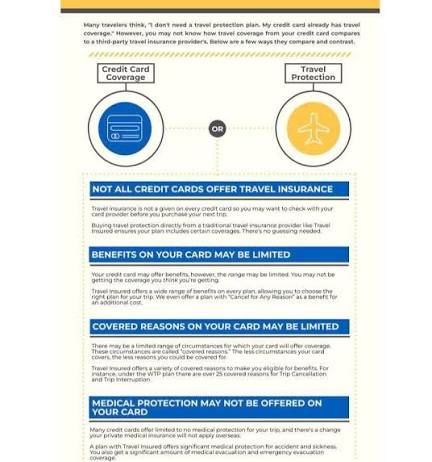
A primary source of confusion for travelers is the nomenclature itself. Credit card companies often market their built-in travel perks using insurance terminology—such as trip cancellation insurance or collision damage waiver—implying that they offer the same breadth of coverage as a commercial policy. However, credit card benefits are legally classified as supplementary cardholder perks rather than standalone insurance contracts. They are governed by a guide to benefits issued by the card network or issuing bank, which can be altered or restricted with minimal advance notice, whereas commercial insurance policies are strictly regulated by state or national insurance commissioners.
Furthermore, evaluating these options strictly by examining headline features creates blind spots regarding core medical liabilities. Most premium credit cards offer zero or extremely restricted emergency health insurance and medical evacuation benefits. Relying on a credit card for an international expedition means that while minor baggage delays or short trip interruptions might be reimbursed, a catastrophic medical emergency or emergency medical evacuation abroad will result in severe out-of-pocket liabilities. Determining which option is better requires aligning policy architecture with trip cost, destination health infrastructure, traveler age, and medical risk profiles.
Evolution and Context of Credit Card Perks and Insured Itineraries
The structural divergence between credit card travel benefits and standalone insurance traces back to shifts in consumer banking loyalty programs and the commercial insurance sector’s adaptation to global mobility. During the mid-twentieth century, travel insurance existed almost exclusively as a specialized product sold through travel agencies or ticket counters, designed to protect expensive steamship and early commercial airline bookings. Concurrently, credit cards operated as simple revolving lines of credit with minimal consumer incentives. As the financial services sector deregulated and competition among card issuers intensified, banks introduced rewards programs and value-added consumer perks to capture high-spending frequent travelers.
As credit card annual fees escalated into the premium tier, card issuers expanded their travel protection suites, incorporating trip cancellation, interruption, and emergency evacuation benefits to compete directly with commercial travel agencies. However, these bank-provided benefits remained constrained by underwriting models designed to limit the issuer’s financial exposure. They function primarily as marketing loss-leaders and retention tools rather than comprehensive risk-transfer products.
In parallel, the commercial travel insurance industry evolved into a sophisticated global market offering modular, customizable policies. Underwriters introduced specialized options such as Cancel For Any Reason waivers, pre-existing medical condition waivers, and high-limit emergency medical evacuation riders. This historical bifurcation created the modern landscape where sophisticated travelers utilize credit card protections for low-risk, domestic travel while deploying standalone commercial policies for complex, high-value, or high-risk international itineraries.
Key Categories and Structural Variations in Coverage Architecture
Evaluating coverage variations requires comparing credit card protections against standalone policies across major operational domains.
Credit Card Travel Protections
Built-in card protections require the cardholder to charge eligible travel expenses directly to the specific credit card to activate coverage. While convenient and bundled into annual card fees, they feature relatively low trip cancellation payout caps, typically ranging from $10,000 to $20,000 per trip. Furthermore, emergency medical and evacuation benefits are minimal or entirely absent on most cards, pre-existing health conditions are rarely covered, and Cancel For Any Reason upgrades are unavailable.
Standalone Commercial Travel Insurance
Dedicated commercial policies are purchased separately as independent legal contracts, priced at approximately 5% to 10% of total trip costs. They offer highly customizable payout caps ranging from $10,000 to over $100,000 per traveler, comprehensive primary medical coverage, high-limit emergency evacuation transport, and valuable optional additions like pre-existing condition waivers and Cancel For Any Reason upgrades.
Real-World Scenarios and Decision Logic
Scenario 1: Short Domestic Weekend Trip with Low Financial Risk
A couple books a weekend flight and hotel stay in a domestic city, charging the total cost entirely to a premium rewards credit card. The financial exposure is minimal, and the trip occurs within domestic healthcare jurisdictions where primary health insurance remains fully active. The couple relies exclusively on their credit card’s built-in trip delay and baggage protection benefits, efficiently resolving a minor flight delay disruption at zero additional cost.
Scenario 2: High-Value International Adventure Expedition with Medical Risks
A family books an expensive multi-week trekking and wildlife expedition in a remote international region. The total trip cost exceeds credit card cancellation maximums, and the destination lacks advanced local healthcare infrastructure, exposing the family to severe medical evacuation risks. The travelers purchase a comprehensive standalone commercial policy with a high-limit medical evacuation rider and a pre-existing condition waiver, ensuring full financial and clinical indemnification.
Planning, Cost Dynamics, and Capital Outlay Accounting
Budgeting for travel protection requires analyzing explicit premium outlays, credit card annual fees, opportunity costs, and financial liabilities during a claim.
-
Credit Card Annual Fee Structure: Fixed annual card fees ranging from $95 to $695+ with zero separate per-trip insurance premiums, though holding a high-fee card solely for insurance represents a substantial fixed overhead cost.
-
Standalone Policy Risk-Based Pricing: Dynamic pricing calculated at 5% to 10% of total non-refundable trip costs, adjusted for traveler age brackets, trip duration, destination risk tiers, and optional add-on riders.
-
Deductible Retainers and Co-Pays: Out-of-pocket deductibles required per claim under standalone policies, alongside potential foreign transaction or currency conversion charges on card purchases.
Governance, Maintenance, and Strategy
For corporate travel managers, family offices, and frequent international travelers, maintaining an optimal risk-mitigation framework requires ongoing portfolio review and structured auditing protocols.
-
Evaluate Itinerary Total Cost Against Card Limits: Calculate total non-refundable trip expenses and compare them against your credit card’s trip cancellation maximums before departure.
-
Audit Destination Healthcare Infrastructure: Assess whether your destination requires specialized international medical insurance and high-limit emergency evacuation coverage.
-
Verify Payment Instrument Consistency: Confirm that all eligible travel expenses are charged to the intended credit card or that a standalone commercial policy has been formally purchased.