Best Travel Insurance Providers for Long-Term Digital Nomads

When evaluating the Best Travel Insurance Providers for Long-Term Digital Nomads, one must first discard consumer-marketing classifications and examine the underlying contractual architecture. In popular discourse, any policy purchased by a remote worker is casually labeled as nomad insurance. In regulatory law and actuarial practice, however, products in this space are partitioned into distinct legal categories: travel medical insurance sold via subscription models, fixed-term international travel policies, and true global expatriate health insurance.
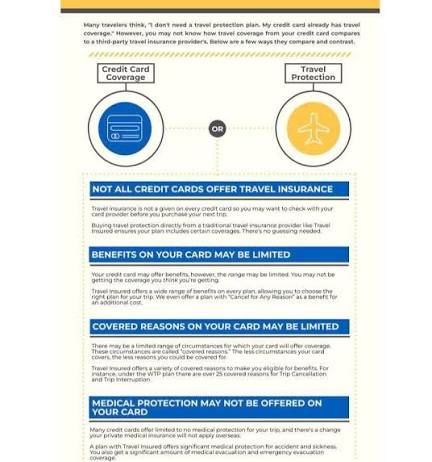
A primary source of confusion among remote professionals is conflating emergency stabilization coverage with comprehensive primary healthcare. A policy advertised as a premier nomad plan may boast a headline medical maximum of $250,000 or $1,000,000, creating an assumption of all-inclusive healthcare access. In practice, travel medical subscriptions are designed exclusively to handle acute, unexpected accidents and sudden illnesses. They routinely exclude routine wellness exams, preventive screenings, chronic disease management, dental care, and vision maintenance. Treating a travel medical policy as a substitute for primary health insurance can lead to severe financial exposure for individuals managing ongoing medical requirements.
Furthermore, evaluating providers purely on monthly premium costs introduces hidden operational vulnerabilities. A provider offering the lowest monthly rate may enforce strict pre-existing condition exclusions, high per-incident deductibles, or restrictive home-country visitation caps that strip away coverage the moment the traveler crosses back into their passport country. A rigorous evaluation framework balances pricing against direct-billing hospital networks, home-country emergency provisions, and the legal flexibility to renew policies indefinitely without mandatory medical re-underwriting.
Evolution and Context of Nomadic Risk Transfer
The commercial underwriting structures supporting modern location-independent lifestyles represent a radical departure from historical insurance paradigms. For the better part of the twentieth century, the insurance industry operated on rigid geographic binaries: domestic residents lived, worked, and sought healthcare within a single nation-state, while international travelers undertook bounded, short-term journeys with fixed departure and return dates. Underwriters priced risk based on the statistical baseline of the home country and the specific duration of the foreign excursion.
The emergence of the digital nomad ecosystem in the early twenty-first century shattered this binary. Enabled by cloud computing, remote software development, and global co-living networks, an increasing segment of the global workforce abandoned fixed residential baselines. Traditional insurers struggled to accommodate these consumers; legacy policies mandated a permanent home address, limited foreign coverage to a maximum duration, and required policyholders to return to their home country for non-emergency medical treatment.
Specialized insurtech startups and forward-thinking global underwriters responded by re-engineering risk-pool mechanics. By introducing subscription-style, rolling-monthly travel medical policies—pioneered by firms like SafetyWing and later refined by specialized providers such as Genki, alongside enterprise-grade global health platforms like Cigna Global and Allianz Care—the industry decoupled continuous coverage from fixed geographic anchors. These modern products allow remote workers to purchase coverage from anywhere in the world, manage renewals digitally, and scale protection tiers dynamically as their career and health trajectories evolve.
Key Categories of Digital Nomad Insurance Policies
Insurance products targeting the location-independent market vary widely in structural design, pricing mechanics, and service delivery.
Subscription Travel Medical Models
Subscription models operate similarly to software-as-a-service platforms. Policies automatically renew every four weeks until canceled by the user, engineered specifically for perpetual travelers who maintain no fixed return date. While administrative friction is minimal, policyholders must accept that minor outpatient care, prescriptions, and preventive check-ups remain entirely self-funded.
Comprehensive International Health Insurance
For nomads with complex medical histories, older demographics, or those requiring long-term stability without geographic restrictions, international health insurance functions as a permanent medical home. These policies require detailed health questionnaires upon application, can exclude or rider pre-existing conditions, and involve higher capital commitments, but they deliver uncompromised medical security.
Adventure and Gear-Specialized Coverages
Tailored for active content creators and outdoor remote workers, these policies blend high-limit emergency medical transport with specialized electronics equipment riders, ensuring both personal safety and high-value professional hardware are indemnified during transit.
Real-World Scenarios and Operational Decision Logic
Scenario 1: The Freelancer in Southeast Asia
A 28-year-old freelance web developer lives nomadically across Thailand and Vietnam without chronic conditions. The nomad selects a Subscription Travel Medical Plan (such as SafetyWing or Genki), providing a $250,000 medical emergency ceiling and handling scooter accidents subject to helmet compliance. When the nomad contracts dengue fever requiring inpatient care in Bangkok, the provider issues a direct-billing guarantee to the private hospital.
Scenario 2: The Digital Nomad Visa Applicant in Europe
A 35-year-old remote executive applies for a long-term residence permit in Portugal. Local immigration authorities explicitly reject basic travel insurance policies that carry high deductibles or limit stays to 90 days. The executive procures a compliant International Health Insurance plan featuring zero deductible, full inpatient and outpatient coverage, and repatriation of remains to ensure smooth bureaucratic approval.
Planning, Cost Dynamics, and Capital Outlay Accounting
Budgeting for long-term nomadic healthcare requires analyzing direct subscription outlays, geographical risk surcharges, deductible leverage mechanics, and opportunity costs.
-
Subscription Travel Medical (Essential Tier): Geared toward nomads aged 20–39. Provides acute emergency medical coverage ($250k cap) with rolling monthly billing. Estimated cost: $45 to $70 per month (excluding the USA).
-
High-Limit Travel Medical (Advanced Tier): Geared toward nomads aged 40–50+. Provides expanded medical limits and lower deductibles. Estimated cost: $80 to $150 per month (excluding USA).
-
Comprehensive International Health Insurance: Geared toward long-term expats and nomads seeking full primary care. Covers routine care, hospitalization, and chronic management. Estimated cost: $250 to $700+ per month (varying by age and deductible).
-
Adventure-Specialized Fixed Policy: Geared toward active travelers requiring high-limit gear and extreme sports protection. Estimated cost: $120 to $250 per month equivalent (billed upfront).
Risk Landscape, Policy Friction Points, and Failure Modes
Operating across shifting international jurisdictions introduces unique regulatory, contractual, and operational risks. Understanding common failure points prevents catastrophic claim denials.
-
The Scooter Accident Exclusion Trap: A pervasive hazard involves renting motor scooters without holding a valid domestic motorcycle license, failing to wear a certified helmet, or driving under the influence. Severe accidents can lead to total claim rejection if these conditions are breached.
-
Maximum Home-Country Stay Violation: Subscription policies permit brief visits to a nomad’s home country, typically capped at 15 to 30 days. Extending stays beyond this threshold without notifying the insurer invalidates foreign coverage.
-
Unapproved Medical Procedures: Emergency stabilization is universally covered, but elective or scheduled surgical procedures performed abroad require explicit prior authorization from the insurer’s medical director.
Governance, Maintenance, and Strategy
Managing continuous cross-border health protection requires leveraging digital tools, assistance infrastructure, and proactive administrative workflows.
-
Audit Travel Footprint & Visas: Review the past 12 months of travel across international borders. Ensure upcoming destination countries do not require specialized health insurance certifications or higher medical limits.
-
Re-evaluate Health Status: Monitor age-based premium step-ups and assess whether emerging health concerns necessitate upgrading from a budget travel medical subscription to comprehensive international health insurance.
-
Test Assistance Channels: Conduct a test interaction with the provider’s 24/7 assistance desk or virtual telehealth portal to verify communication latency and support responsiveness.
Conclusion and Strategic Synthesis
Selecting among the Best Travel Insurance Providers for Long-Term Digital Nomads demands an analytical framework focused on the distinction between catastrophic risk mitigation and primary health maintenance. Surface-level choices driven solely by monthly subscription price tags fail to address the intricate realities of long-term international mobility, pre-existing condition exclusions, visa compliance mandates, and emergency medical repatriation logistics.
By carefully assessing whether their lifestyle requires a rolling travel medical subscription or comprehensive international health insurance, remote professionals can build a resilient protection framework. Through disciplined policy audits, strict adherence to local transit regulations, and transparent evaluation of personal health baselines, location-independent workers can secure their physical well-being and financial capital anywhere in the world.