Best Emergency Medical Evacuation Insurance for International Trips

International travel exposes individuals to medical vulnerabilities that operate entirely outside standard domestic healthcare frameworks. While routine travel insurance handles minor inconveniences like delayed baggage or canceled flights, catastrophic medical crises abroad introduce a completely different set of operational challenges. When a traveler suffers a severe cardiac event in a remote region, contracts an acute infectious disease in a developing nation, or sustains severe trauma in an isolated area, financial reimbursement for hospital bills becomes secondary. The immediate priority shifts entirely to rapid physical extraction, stabilization, and high-acuity medical transport.
The logistics of international medical transport involve complex networks of specialized air ambulance operators, flight physicians, critical care paramedics, diplomatic clearance agencies, and specialized insurance underwriters. A standard health insurance policy or basic credit card travel perk rarely covers the astronomical costs of international air ambulance deployment, which can easily range from $50,000 to over $250,000 depending on the distance, aircraft configuration, and medical team requirements. Furthermore, local medical facilities in foreign destinations frequently demand upfront financial guarantees or cash deposits before initiating critical care interventions.
Navigating this high-stakes landscape requires evaluating emergency medical evacuation products as critical life-safety contracts rather than basic financial add-ons. Selecting the right protection demands a deep understanding of transport definitions, nearest adequate facility clauses, hospital-of-choice repatriation rules, and direct-pay operational guarantees. This reference guide deconstructs the historical evolution, structural variations, financial dynamics, operational risk factors, and governance strategies governing international medical transport protection.
Best Emergency Medical Evacuation Insurance for International Trips
When systematically evaluating the Best Emergency Medical Evacuation Insurance for International Trips, travelers and corporate risk managers must first decouple medical evacuation coverage from standard travel insurance or health insurance plans. In consumer marketing, travel insurance policies frequently list impressive medical evacuation maximums—such as $500,000 or $1,000,000—giving buyers a false sense of security. In operational practice, these standard policies treat evacuation as a minor sub-limit of a broader trip cancellation and baggage protection plan, subject to restrictive contractual triggers and third-party bureaucratic approval processes.
A primary source of claim disputes and operational delays is the strict contractual enforcement of the nearest adequate facility clause. Most standard travel insurance policies stipulate that the insurer will pay to transport an injured or sick traveler only to the nearest medical facility deemed capable of providing adequate care. If a traveler suffers a severe medical crisis in a remote region, the insurer may authorize evacuation to a regional capital hospital that meets baseline international standards. However, the policy will explicitly deny requests to fly the patient back to their home country or to a preferred medical center near their family and primary care physicians.
Furthermore, evaluating policies strictly on headline financial limits ignores the crucial distinction between insurance reimbursement models and direct-service rescue memberships. Traditional insurance policies require the policyholder or their family to pay local medical providers and air ambulance operators out of pocket, followed by a lengthy reimbursement claims process. Conversely, specialized rescue memberships operate as direct-service providers that deploy their own tactical teams, coordinate bed-to-bed logistics, and cover all transport expenses upfront without deductibles or co-pays.
Evolution and Context of Medical Transport Underwriting
The historical development of cross-border medical evacuation reflects broader shifts in aviation technology, critical care medicine, globalization, and international insurance markets. During the mid-twentieth century, international air travel expanded rapidly, but long-distance medical transport remained primitive. When citizens fell seriously ill abroad, they relied on commercial airline stretcher arrangements—a cumbersome process requiring the removal of multiple aircraft seats, complex coordination with commercial carriers, and minimal onboard medical support. Dedicated civil air ambulance jets outfitted with intensive care unit equipment were virtually nonexistent outside of military applications.
The modern air ambulance and medical repatriation sector emerged during the 1980s and 1990s. As commercial jet manufacturing advanced and specialized aeromedical transport companies formed, insurance underwriters began bundling medical evacuation benefits into international travel products. However, these early offerings were fragmented, expensive, and plagued by ambiguous contract language regarding what constituted a legitimate medical emergency.
The contemporary era is defined by sophisticated global dispatch networks, advanced turboprop and jet air ambulances, real-time telemedicine integration, and specialized membership organizations. Today’s premier emergency medical evacuation providers operate 24/7 intelligence and tactical coordination centers capable of deploying medically configured aircraft anywhere in the world within hours.
Key Categories of Evacuation Architecture
Emergency medical transport protection plans differ across corporate structures, underwriting models, geographical limits, and operational capabilities.
Dedicated Medical Transport Memberships
Dedicated memberships operate fundamentally differently from standard insurance policies. Rather than indemnifying financial losses, organizations like Medjet provide direct logistical execution. A core membership guarantees that if a member is hospitalized more than 150 miles from home and meets basic transport criteria, the organization will arrange and pay entirely for medical transport back to a home country hospital of the member’s choice, bypassing nearest adequate facility restrictions entirely.
Comprehensive Travel Insurance Plans
These plans serve travelers seeking a single policy covering trip cancellation, lost luggage, emergency medical care, and medical evacuation. While convenient, their evacuation benefits are strictly bound to medical necessity and geographic proximity rules. If a local hospital can treat an illness, the insurer will not fund an air ambulance back home, regardless of personal comfort or language barriers.
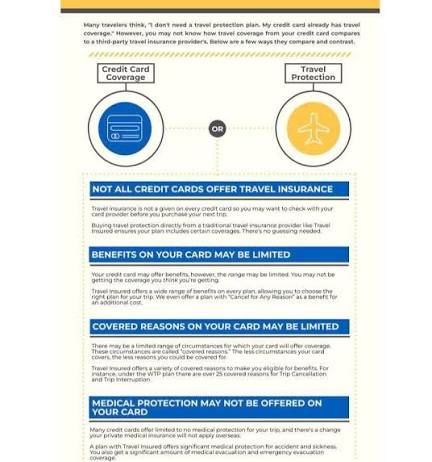
Premium Credit Card Travel Protections
High-fee travel credit cards offer built-in emergency medical transportation benefits when the trip is charged to the card. While valuable as a baseline safety net, these credit card protections often carry modest maximum limits and require rigorous documentation. They should never be relied upon as the sole evacuation strategy for high-risk international itineraries.
Real-World Scenarios and Decision Logic
Scenario 1: Cardiac Arrest in a Remote Resort
A traveler suffers a massive myocardial infarction while staying on a remote island, requiring emergency stabilization at a local clinic followed by an immediate air ambulance transfer. The traveler holds a dedicated medical transport membership combined with a comprehensive travel medical policy. The local clinic stabilizes the patient, and the dedicated transport coordinator dispatches an ICU-configured jet to a major medical hub, followed by a seamless transfer.
Scenario 2: Severe Traumatic Injury During a Ski Trip
A skier sustains multiple compound fractures and internal bleeding during an off-piste accident in a mountain resort, requiring helicopter rescue and subsequent surgery locally. The traveler’s comprehensive policy covers emergency medical evacuation to the nearest adequate facility where world-class trauma care is immediately available, satisfying the contractual necessity clause. Because the local hospital provides top-tier care, the insurer denies the traveler’s request for a private jet transport back home.
Planning, Cost Dynamics, and Capital Outlay Accounting
Budgeting for emergency medical evacuation protection requires evaluating annual membership dues, comprehensive policy premiums, geographical surcharges, and potential out-of-pocket transport gaps.
-
Dedicated Annual Medical Transport Membership: Annual cost ranges from $300 to $600. Features hospital-of-choice repatriation worldwide, bypassing nearest adequate facility restrictions entirely.
-
Comprehensive Travel Insurance Plan: Per-trip cost ranges from $150 to $400. Features a pooled evacuation limit of $100,000 to $1,000,000, combining trip cancellation with medical transport.
-
Premium Credit Card Travel Benefit: Annual card fee ranges from $550 to $695. Provides baseline evacuation coverage up to strict maximum caps without added insurance charges.
-
Specialized Expedition & Extreme Sports Membership: Annual cost ranges from $400 to $900. Features uncapped field rescue and medical evacuation for technical mountaineering and remote regions.
Risk Landscape and Operational Failure Modes
Understanding policy fine print, exclusion clauses, and operational friction points prevents catastrophic failures during medical crises.
-
The Independent Evacuation Trap: If a traveler or their family panics during a foreign medical crisis and independently hires a local air ambulance without prior written authorization from the insurance assistance desk, the insurer will deny the claim entirely.
-
Diplomatic and Airspace Clearance Lags: Even when an insurer approves an air ambulance immediately, international bureaucratic hurdles—such as securing diplomatic overflight permits, airport landing slots, and customs clearances—can delay aircraft departure.
-
Pre-Existing Medical Condition Exclusions: Failing to disclose chronic underlying health conditions during policy underwriting can result in severe coverage disputes when acute flare-ups require emergency medical transport.
Governance, Maintenance, and Strategy
For corporate travel managers, family offices, and frequent international travelers, maintaining robust medical transport protection requires continuous oversight and structured review protocols.
-
Verify Membership Currency and Expiration Dates: Confirm that annual evacuation memberships or travel policies are fully paid and active before crossing international borders.
-
Audit Policy Limits and Destination Restrictions: Check whether the destination country falls under any underwriter travel advisories, sanctions, or geographic exclusions.
-
Review Medical Necessity vs. Repatriation Terms: Clarify whether the policy enforces nearest adequate facility rules or permits hospital-of-choice repatriation.
Conclusion and Strategic Synthesis
Selecting among the Best Emergency Medical Evacuation Insurance for International Trips requires a rigorous, analytical review of contract definitions, transport triggers, network capabilities, and financial limits. Relying on basic credit card perks, domestic health insurance, or budget travel policies during complex international journeys exposes travelers to severe financial loss and operational delays.
By aligning protection choices with specific destination risk profiles—utilizing dedicated annual transport memberships like Medjet for hospital-of-choice repatriation or comprehensive plans for balanced trip protection—travelers can ensure rapid, professional intervention during a medical crisis. Through disciplined contract analysis, emergency planning, and proactive risk management, robust evacuation protection serves as an indispensable anchor for safe international mobility.