Best Exclusive Airport VIP Fast-Track and Lounge Services
The modern commercial aviation terminal represents an intricate exercise in high-throughput civil engineering and passenger processing. Designed to accommodate tens of millions of travelers annually, international hubs channel individuals through standardized queues for baggage drop, security screening, passport control, and gate boarding. For corporate executives, diplomatic delegations, high-net-worth families, and operational deal teams, this mass-transit environment introduces significant logistical friction, unpredictable delays, data-privacy risks, and cognitive fatigue. Preserving physical energy and maintaining data security across global transit corridors requires bypassing the public terminal infrastructure entirely or utilizing dedicated priority pathways.
Airport priority logistics operate as a specialized layer within commercial aviation. Beyond standard elite frequent flyer queues or commercial first-class check-in counters exists a multi-tiered infrastructure of private terminal suites, airside escort services, expedited immigration lanes, and tarmac transfers. These services operate under strict regulatory arrangements negotiated between airport authorities, state border agencies, ground handling agents, and specialized concierge providers. Understanding how to procure, orchestrate, and govern these assets demands an analytical perspective that extends far beyond casual travel booking.
Evaluating high-priority terminal handling requires looking past marketing terminology to examine underlying operational mechanics. The efficacy of an expedited airport workflow depends on local airport authority mandates, airside access regulations, customs agency protocols, and the physical architecture of specific international hubs. This reference guide deconstructs the systemic evolution, conceptual frameworks, financial dynamics, and operational risk factors governing global VIP fast-track and private terminal lounge ecosystems.
Best Exclusive Airport VIP Fast-Track and Lounge Services
Evaluating the Best Exclusive Airport VIP Fast-Track and Lounge Services requires decoupling consumer travel notions from professional mobility logistics. In consumer travel discourse, VIP services are often viewed through the lens of luxury indulgence—champagne receptions, driver-driven tarmac transfers, or lavish lounge decor. In institutional travel management, however, these services function primarily as operational buffer mechanisms designed to eliminate queue volatility, preserve executive billable hours, protect high-profile personnel from public exposure, and guarantee schedule integrity during tight international connections.
A frequent source of operational failure is confusing airline-provided premium ground handling with independent airport VIP services. Commercial airline first-class ground services are strictly bound to the carrier’s operating terminal, departure schedules, and alliance agreements. In contrast, third-party VIP fast-track and private terminal operators work across multiple airlines, handling interline transfers between unaffiliated carriers, managing ground transport handoffs, and utilizing dedicated airport authority security lanes that remain inaccessible to standard commercial ticket holders.
Furthermore, evaluating priority services purely based on headline promises introduces operational vulnerabilities. A provider advertising “complete airport fast-track” may offer an airside escort who merely guides the traveler to the back of a shorter priority lane, lacking authorization to bypass state immigration checks. In contrast, full-scale VIP terminal services divert the traveler entirely away from public buildings into a dedicated facility with private border inspection officers and direct tarmac vehicle transport to the aircraft door.
Evolution and Context of Priority Passenger Handling
The historical evolution of priority airport handling reflects broader shifts in global security regulations, commercial aviation volume, and sovereign diplomatic protocols.
During the early post-war era of commercial flight, passenger volumes were low enough that processing queues were minimal. Airport terminals functioned as unified, open-access public buildings where check-in and boarding were straightforward. State protocols and diplomatic couriers were handled informally through direct coordination between airport station managers and local police authorities. As commercial aviation expanded rapidly during the 1970s and 1980s, rising passenger densities prompted airports to establish formal, structured protocols for state officials and corporate leadership.
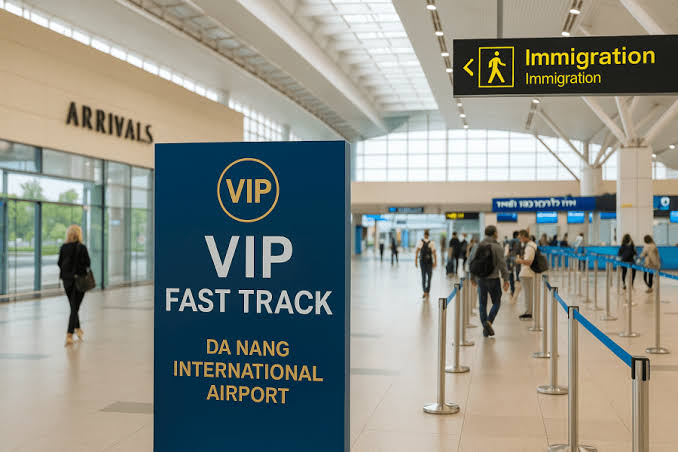
The events of September 11, 2001, fundamentally altered global aviation security architecture. State authorities introduced stringent mandatory security screening, biometric passport verification, and hardened terminal perimeters. These regulatory mandates eliminated informal border bypasses, forcing airport operators and ground handling agencies to build formalized, compliant priority handling frameworks. Dedicated fast-track lanes were constructed within main terminals, while major hubs developed fully segregated Fixed-Base Operator facilities and government VIP suites to maintain high security standards without compromising passenger throughput.
The contemporary era is defined by commercial monetization, biometric automation, and multi-layered third-party service aggregation. Facing severe terminal congestion and dynamic passenger volume surges, airport authorities have increasingly privatized VIP operations, licensing specialized concessions to global service providers. For modern corporate mobility desks, this means navigating a complex, highly fragmented global landscape where service capabilities vary drastically by country, airport authority, and terminal architecture.
Key Categories of Terminal VIP Services
Airport priority services vary widely in operational scope, security clearance levels, structural integration, and pricing models.
Standalone Private VIP Terminals
Operating from separate, highly secure facilities detached from public terminals, these suites represent the highest tier of commercial passenger handling. They provide private security screening, dedicated immigration officers, luxury private suites, fine dining, and chauffeured tarmac transfers directly to the aircraft door.
Full Meet-and-Greet Airside Escort Services
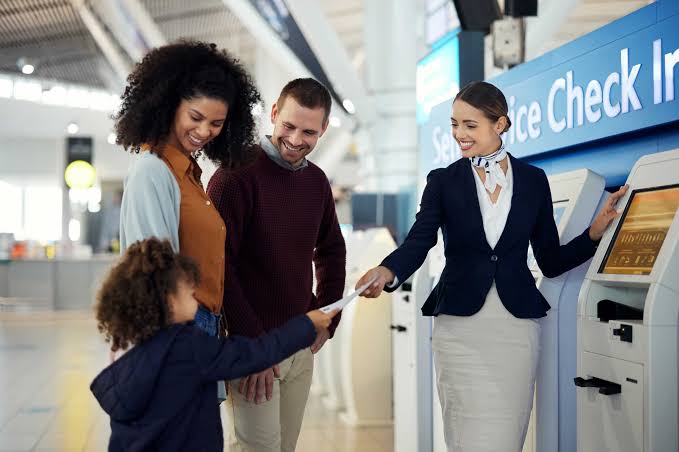
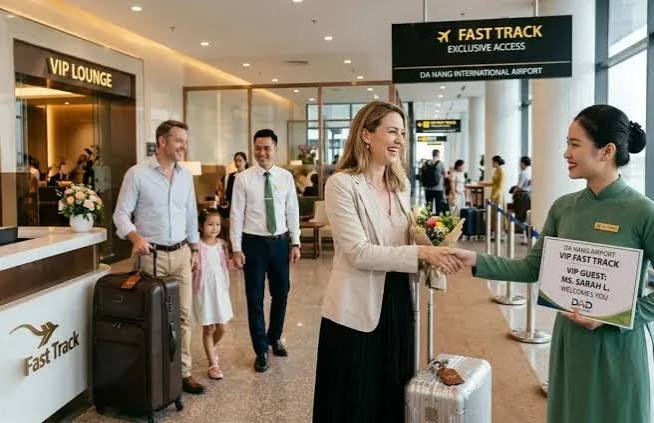
Operating within main terminal buildings, professional escorts meet passengers at the curb or jet bridge. They manage baggage handling, navigate dedicated fast-track security and customs portals, provide access to premium partner lounges, and coordinate pre-boarding privileges.
Diplomatic Protocols and Commercial Flagship Suites
Specialized VIP procedures are managed directly by state protocols for government delegations, while commercial airline flagship suites provide exclusive ground handling ecosystems reserved for international first-class passengers flying on specific legacy carriers.
Real-World Scenarios and Decision Logic
Scenario 1: The Tight Interline Transfer at a Congested Mega-Hub
A senior corporate deal team flies from Frankfurt to London Heathrow on Lufthansa, connecting 65 minutes later to an international British Airways flight to New York on separate tickets. The corporate travel desk arranges a private airside meet-and-greet service at Heathrow Terminal 2. An agent meets the team at the arrivals gate, expedites their airside transfer across terminals, retrieves their checked baggage behind the scenes, and re-checks it onto the departing flight while escorting the team through Terminal 5 fast-track security to the lounge.
Scenario 2: High-Profile Executive Media and Privacy Protection
A high-visibility corporate founder must travel to a major international capital during an intense media-scrutiny event. The security team books a standalone private terminal suite. The principal arrives via a gated vehicle entrance, relaxes in a soundproof private suite, clears border control privately inside the facility, and is driven directly across the tarmac in a private vehicle to board the aircraft after all commercial passengers have seated.
Conclusion and Strategic Synthesis
Selecting and deploying the Best Exclusive Airport VIP Fast-Track and Lounge Services demands a disciplined, analytical approach centered on perimeter isolation, hub-specific regulatory compliance, risk mitigation, and clear time-value economics. Relying on surface-level marketing or assuming commercial elite status guarantees seamless terminal transit fails to address the operational complexities of international aviation infrastructure.
By aligning handling services with specific travel profiles—utilizing standalone VIP terminals for maximum security and privacy, airside meet-and-greet escorts for complex interline connections, and pre-cleared biometric channels for frequent solo transit—organizations can convert chaotic airport hubs into predictable, productive transit nodes. Through rigorous vendor governance, proactive tracking, and realistic planning, managing airport priority logistics becomes an indispensable component of global corporate mobility and executive protection.