Best Annual Multi-Trip Travel Insurance Plans for Frequent Flyers

To rigorously evaluate the Best Annual Multi-Trip Travel Insurance Plans for Frequent Flyers, one must first decouple public perceptions of travel convenience from the structural mechanics of insurance underwriting. In public discourse, annual policies are marketed as hassle-free solutions for individuals who live in transit. In contract law and actuarial practice, however, annual plans represent a distinct asset class built around probability distribution across time rather than discrete events.
A frequent traveler’s risk profile differs structurally from that of an occasional vacationer. The occasional traveler faces localized, concentrated risks—a canceled cruise, a lost bag on an annual vacation, or an acute illness during a two-week resort stay. The frequent flyer operates within a continuous matrix of operational friction: compounding flight delays, tight interline connections, shifting international entry protocols, repeated exposures to regional pathogens, and routine equipment swaps across regional and mainline air carriers.
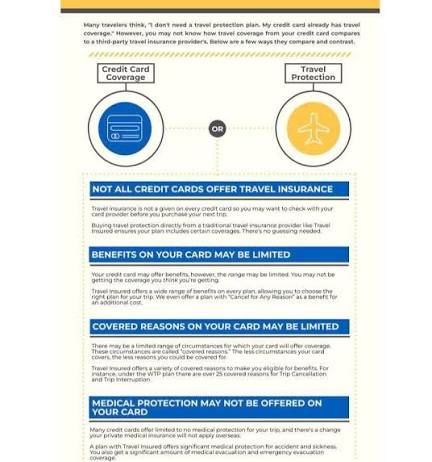
A primary point of confusion for prospective policyholders is the distinction between annual travel insurance and the travel benefits embedded within premium credit cards. While high-end payment cards offer baseline protections for trip delays and lost baggage, their benefits are tied directly to transactions processed on that specific card. Furthermore, card-based protections almost universally apply secondary coverage models, requiring policyholders to exhaust airline reimbursements and personal health insurance claims before paying out. Standalone annual policies, particularly those tailored for high-frequency travel, often provide primary coverage and operate independently of how individual travel legs were financed.
The core challenge in selecting an annual plan lies in matching policy constraints to real-world operational patterns. A policy that limits individual trip durations to thirty days offers zero utility to an executive whose overseas assignments routinely extend to six weeks, regardless of how attractive the policy’s headline medical limits appear. Evaluating these plans requires balancing per-trip duration limits, annual aggregate trip cancellation caps, medical evacuation dispatch criteria, and the specific mechanics of pre-existing condition waivers across an entire calendar year.
Evolution and Context of Multi-Trip Risk
The commercial travel insurance market originated in the mid-twentieth century as an outgrowth of traditional accident insurance, focusing primarily on single-event flight coverage sold at airport kiosks. Early policies were simple indemnity contracts designed to cover catastrophic airframe accidents. As global commercial aviation expanded, policy scope broadened to encompass non-medical trip interruptions, lost luggage, and acute foreign health expenses.
The structural transition toward annual multi-trip contracts occurred in parallel with the globalization of corporate supply chains and the rise of international executive travel in the late 1980s and 1990s. Corporations realized that processing individual single-trip policies for hundreds of traveling employees created massive administrative overhead and inconsistent risk exposure. Insurers responded by designing blanket annual policies that pooled operational risk across time, offering discounted per-trip premiums in exchange for predictable, annualized capital inflows.
Today’s travel environment presents continuous volatility. Air traffic networks operate at near-peak capacity, meaning minor disruptions at global hub airports cascade into multi-day scheduling collapses. Simultaneously, international healthcare costs have inflated rapidly, making out-of-pocket medical stabilization in foreign jurisdictions a multi-hundred-thousand-dollar risk exposure. Modern annual protection functions as an active logistical support framework featuring real-time travel monitoring, direct-pay medical networks, non-medical security evacuation capabilities, and seamless risk management.
Key Categories and Structural Variations in Annual Policies
Annual travel insurance plans are not built on uniform contract templates. Insurers structure their offerings into distinct categories designed for specific traveler profiles.
Medical-Focused Annual Plans
These plans prioritize high-limit emergency medical care, direct hospital billing, and international medical evacuation, offering minimal coverage for trip cancellations or lost baggage. They suit international corporate travelers with fully flexible tickets who primarily need protection against extreme foreign healthcare costs.
Comprehensive Annual Multi-Trip Plans
These policies combine international emergency medical coverage with trip cancellation, trip interruption, travel delay, and baggage protection. They provide broad financial protection across medical and logistical failure modes for frequent leisure travelers, independent consultants, and executives.
Specialty Executive Protection Plans
Underwritten for corporate officers and high-net-worth individuals, these policies offer elevated cancellation caps, high-limit medical evacuation, security extraction, and kidnap-and-ransom riders. They are designed for travelers operating in geopolitically volatile or high-risk geographic regions.
Real-World Scenarios and Decision Logic
Scenario 1: Complex Multi-Leg Interline Disruption
A consultant departs Chicago for a multi-city tour through Frankfurt, Nairobi, and Johannesburg across separate tickets. Severe weather causes a 14-hour delay in Frankfurt, missing an independently booked regional connection in Nairobi. Under standard credit card coverage, the regional ticket loss is denied because it was purchased independently. Under a comprehensive standalone annual policy featuring missed connection riders, the non-refundable ticket loss and overnight hotel expenses are covered up to daily delay caps.
Scenario 2: Remote Medical Stabilization and Repatriation
An executive suffers severe trauma in a rural area of Vietnam. The local hospital lacks specialized trauma surgery capabilities. A standard medical plan underwriter might mandate transfer to a regional clinic in Ho Chi Minh City, deeming it medically adequate. An executive plan with hospital-of-choice evacuation dispatches a dedicated air ambulance to transport the patient directly to Singapore or back to their home country institution.
Risk Landscape, Policy Friction Points, and Failure Modes
Annual multi-trip protection operates within complex contractual frameworks where misunderstanding terms can lead to denied claims.
-
Dynamic Look-Back Windows: Unlike single-trip policies with fixed look-back periods, some annual plans reset the pre-existing condition look-back window relative to the departure date of each trip. A mid-year prescription change can inadvertently make a condition pre-existing for subsequent trips.
-
Non-Scheduled Aviation Exclusions: Standard annual policies often restrict coverage strictly to scheduled commercial air carriers. Flying on private charters (Part 135) or general aviation can trigger exclusions under aviation riders unless specifically endorsed.
-
Aggregate Cancellation Cap Exhaustion: Annual plans enforce a maximum aggregate cancellation limit per year (e.g., $5,000 total). Exhausting this cap on an early claim leaves all remaining trips throughout the policy year without cancellation protection.