Is Cancel For Any Reason (CFAR) Travel Insurance Worth It?

The contemporary landscape of international mobility is characterized by heightened schedule volatility, shifting geopolitical corridors, and complex consumer exposure profiles. When individuals or corporate travel managers commit substantial capital to non-refundable itineraries—ranging from multi-generational safari expeditions to high-stakes executive retreats—the financial risks of unexpected disruption expand rapidly. Standard trip cancellation insurance provides a robust safety net, but only under narrow, pre-defined circumstances. Sudden changes in personal preference, generalized unease, shifting business priorities, or minor calendar conflicts routinely fail to meet the strict legal thresholds of standard named-peril policies.
To bridge this operational gap, the travel insurance sector developed Cancel For Any Reason (CFAR) protections. Far from being a frictionless refund guarantee, CFAR operates as a specialized, heavily restricted endorsement that alters the risk distribution between underwriter and policyholder. Evaluating whether this elective financial instrument justifies its substantial cost requires peeling back commercial marketing layers to inspect core underwriting mechanics, strict temporal compliance windows, partial reimbursement limits, and alternative risk-management strategies.
Is Cancel For Any Reason (CFAR) Travel Insurance Worth It?
When analyzing Is Cancel For Any Reason (CFAR) Travel Insurance Worth It?, one must first decouple the colloquial interpretation of the phrase from its strict contractual reality. In consumer discussions, CFAR is frequently viewed as a blank check that allows a traveler to walk away from a trip at any moment for a full refund. In actuarial science and insurance law, however, CFAR is a conditional indemnity add-on that permits the insured to break a contract for an unlisted, unverified reason, provided they adhere to an unforgiving sequence of procedural gates.
A primary source of confusion lies in the reimbursement math. CFAR policies never return one hundred percent of prepaid, non-refundable expenses. Standard market offerings cap payouts between fifty and seventy-five percent of total insured trip costs, leaving the policyholder to absorb the remaining unrecovered loss. Furthermore, the financial barrier to entry is high; adding a CFAR rider typically inflates the base cost of a comprehensive travel insurance policy by forty to sixty percent. This creates a distinct economic dilemma: the traveler pays a steep upfront premium surcharge only to accept a contractually mandated financial penalty upon cancellation.
Oversimplifying the value proposition by comparing only raw premium costs against total trip value misses the structural purpose of the instrument. CFAR is not designed to function as an economical hedge against routine trip friction. Rather, it is a specialized liquidity preservation tool meant to insulate capital against subjective, uninsurable contingencies—such as a sudden change in professional obligations, a domestic relocation, generalized anxiety regarding regional stability, or scheduling shifts that fall outside legally recognized family emergencies. Determining its worth requires balancing the probability of exercising subjective cancellation against the guaranteed out-of-pocket premium inflation.
Evolution and Context of Flexible Travel Risk Transfer
The historical trajectory of trip cancellation insurance mirrors the shifting complexities of the global tourism and corporate mobility markets. For much of the mid-twentieth century, travel protection was rooted in named-peril frameworks. Underwriters indemnified losses only when specific, verifiable catastrophic events occurred: the acute hospitalization or death of the traveler or an immediate family member, carrier bankruptcy, sudden natural disasters rendering a destination uninhabitable, or declared civil war.
As international travel grew more dynamic during the late 1990s and early 2000s, consumer demand shifted. Travelers began booking complex, expensive, non-refundable itineraries months or years in advance. This temporal gap increased exposure to unpredictable life changes that did not align with traditional insurance triggers. An executive forced to cancel a vacation due to a sudden corporate merger, an individual experiencing acute travel anxiety following shifting geopolitical headlines, or a family altering plans due to a non-hospitalized relative’s illness found themselves entirely unprotected under standard named-peril terms.
In response, specialty underwriters introduced Cancel For Any Reason endorsements to capture high-net-worth and risk-averse consumer segments. By pricing in the severe adverse selection risk—the statistical certainty that policyholders opting for total freedom are more likely to utilize it—insurers engineered a high-margin, highly constrained product class. Today, CFAR represents a multi-billion-dollar niche within travel risk management, balancing consumer demand for absolute schedule autonomy against strict actuarial controls designed to prevent systemic underwriting loss.
Key Categories and Structural Variations in CFAR Products
Cancel For Any Reason endorsements are not uniform across the insurance marketplace. Underwriters differentiate their offerings through reimbursement percentages, purchasing windows, and integration with base policies.
Premium Tier Comprehensive Add-On
These plans typically provide a 75% reimbursement of non-refundable trip costs and must be purchased within 10 to 21 days of the initial trip deposit. They require the policyholder to insure 100% of all prepaid non-refundable expenses.
Mid-Tier Standard Add-On
These variations offer 50% to 60% reimbursement tiers and usually require purchase within 14 days of the first deposit, enforcing cancellation deadlines at 48 to 72 hours prior to primary departure.
Specialized Tour Operator CFAR
Offered directly by high-end travel providers, these programs reimburse 75% to 80% of trip costs, though payouts are frequently issued in the form of future travel credits or vouchers rather than liquid cash wire transfers.
Real-World Scenarios and Decision Logic
Scenario 1: The Multi-Generational Safari
A family of six books an African safari package twelve months in advance, committing $45,000 in non-refundable deposits. An elderly parent has a stable chronic condition that does not meet standard waiver terms. Purchasing CFAR ensures that if health conditions decline short of acute hospitalization, the family can cancel 72 hours before departure and recover 75% ($33,750) of their investment rather than losing the entire $45,000.
Scenario 2: The Corporate Executive Facing Restructuring
A senior vice president books a high-end personal sabbatical to Japan, locking in $12,000 in non-refundable reservations. While standard policies cover involuntary job loss, they exclude voluntary project overhauls or denied vacation time. CFAR allows the executive to cancel without justification if major corporate restructuring lands on their scheduled departure week.
Planning, Cost Dynamics, and Capital Outlay Accounting
Evaluating the true financial footprint of CFAR requires moving past baseline quotes to examine structural cost factors and actuarial pricing inputs.
-
Moderate Budget Trip ($5,000 Value): Base comprehensive policies cost $150 to $250, with a CFAR surcharge adding $80 to $130, yielding a 75% reimbursement payout of $3,750 upon cancellation.
-
High-End Luxury Tour ($15,000 Value): Base comprehensive policies cost $500 to $800, with a CFAR surcharge adding $250 to $450, yielding a 75% reimbursement payout of $11,250.
-
Ultra-Luxury Expedition ($50,000 Value): Base comprehensive policies cost $1,200 to $2,000, with a CFAR surcharge adding $600 to $1,000, yielding a 75% reimbursement payout of $37,500.
Risk Landscape, Policy Friction Points, and Failure Modes
Deploying CFAR insurance introduces specific operational and contractual vulnerabilities. Recognizing these failure modes prevents costly claim rejections.
-
The Delayed Purchase Trap: The most frequent point of failure occurs when travelers attempt to add CFAR weeks after booking a trip. Missing the strict 10-to-21-day window from the first deposit closes eligibility permanently.
-
The 48-Hour Pre-Departure Blackout: Canceling within 48 hours of primary departure invalidates the CFAR claim completely, reducing the payout to zero.
-
Voucher vs. Cash Reimbursements: Certain tour operator programs issue refunds exclusively as future travel credits rather than direct bank wire transfers.
Governance, Maintenance, and Strategy
Managing high-value travel protection portfolios requires structured oversight, regular policy audits, and clear decision triggers.
-
Audit Itinerary Volatility: Review travel booking habits over past months. If obligations frequently force itinerary changes, evaluate whether cumulative CFAR surcharges outweigh self-insuring losses.
-
Verify Underwriting Windows: Confirm whether preferred underwriters have tightened their initial deposit purchase windows from 21 days down to 10 or 14 days.
-
Cross-Check Credit Card Perks: Audit premium credit card benefits to verify whether card-linked travel protections duplicate or alter baseline cancellation coverage.
Conclusion and Strategic Synthesis
Determining whether Is Cancel For Any Reason (CFAR) Travel Insurance Worth It? depends entirely on an honest appraisal of personal risk tolerance, itinerary financial scale, and lifestyle predictability. Surface-level generalizations fail to capture the strict structural boundaries of the product. CFAR is an expensive, highly conditional financial derivative that trades absolute capital security for partial liquidity preservation under subjective terms.
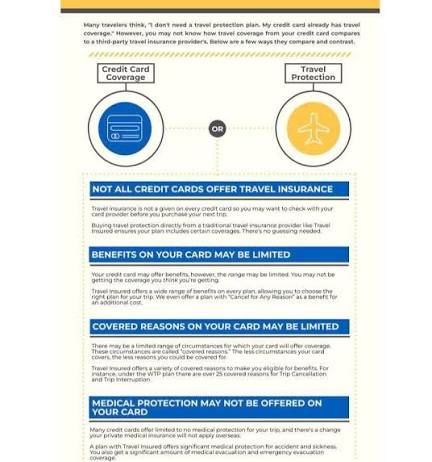
For travelers booking modest itineraries, fully refundable components, or maintaining predictable schedules, the steep 40% to 60% premium inflation renders CFAR an inefficient use of financial resources. Conversely, for individuals committing tens of thousands of dollars to rigid, non-refundable luxury expeditions, CFAR functions as an essential catastrophic loss mitigator. By respecting initial deposit deadlines, adhering to 48-hour pre-departure rules, and accepting partial reimbursement terms, travelers can deploy CFAR not as an impulse add-on, but as a calculated instrument of financial self-defense.