Top Cheap Travel Insurance Companies with High Coverage Limits
The commercial travel insurance sector presents a sharp structural paradox. On one end of the spectrum sit budget-tier, named-peril plans that cost very little up front but offer restrictive sub-limits, narrow medical caps, and secondary coverage mechanics that collapse when exposed to catastrophic claims. On the other end sit premium comprehensive policies that offer extensive coverage but introduce high baseline premiums, often adding six to twelve percent to total non-refundable trip costs. For cost-conscious travelers, corporate travel desks, and budget-minded families, finding effective coverage requires identifying underwriters capable of resolving this tension: low upfront premiums paired with high financial protection limits.
Securing low-cost policies with elevated coverage limits requires analyzing risk transfer mechanisms, actuary-driven pricing tiers, sub-limit structures, and loss-ratio optimization strategies. A policy advertised for thirty dollars for a multi-week international trip may appear to offer one million dollars in total emergency medical and evacuation coverage. However, beneath that headline figure may hide severe contractual limits: a twenty-five-thousand-dollar cap on acute inpatient medical expenses, a strict pre-existing condition look-back window, or clauses that restrict emergency medical evacuations strictly to the nearest regional municipal facility rather than repatriating the patient to their home country.
Navigating this market demands an understanding of how underwriters separate high-frequency, low-dollar risk (such as baggage delays or missed flight connections) from low-frequency, high-severity risk (such as air ambulance evacuations, ICU hospitalizations, or complex trip interruptions). By stripping away cosmetic add-ons and focusing policy capital strictly on high-severity risk triggers, travelers can locate insurance providers that balance affordability with high coverage caps.
Top Cheap Travel Insurance Companies with High Coverage Limits
To evaluate the Top Cheap Travel Insurance Companies with High Coverage Limits, one must first decouple total policy cost from true coverage depth. In mass-market consumer finance, cheap is frequently conflated with inadequate or stripped-down coverage. Conversely, high coverage limits are often assumed to be exclusive to expensive, top-tier comprehensive policies. In institutional insurance underwriting, however, policy pricing is not a direct linear reflection of maximum financial caps; it is a calculation of claim trigger probability, administrative processing overhead, and loss-ratio balancing.
A common misunderstanding among international travelers is assuming that a policy’s aggregate limit applies uniformly across all loss events. An underwriter offering a cheap plan with a headline limit of $500,000 may allocate $450,000 of that total strictly to emergency medical evacuation, while capping actual medical treatment at $25,000 and trip cancellation at $1,000. If an uninsured traveler suffers a major stroke overseas requiring $150,000 in ICU stabilization before evacuation can occur, the policy exhausts its medical cap almost immediately, leaving the policyholder personally responsible for the remaining balance despite holding a half-million-dollar policy.
Furthermore, evaluating budget high-limit policies through superficial online comparison aggregators introduces structural risks. Comparison engines routinely highlight low base rates while obscuring critical policy exclusions, such as pre-existing medical condition look-back shifts, hazardous activity exclusions, or secondary coverage clauses that force policyholders to file claims through primary domestic health plans first. A rigorous evaluation framework balances low premium pricing against primary indemnity structures, sub-limit clarity, 24/7 assistance dispatch capabilities, and underwriter financial strength ratings.
Evolution and Context of Budget Underwriting
The economic architecture of travel insurance has evolved through three distinct operational phases over the past half-century. Understanding this progression clarifies how modern budget carriers deliver elevated coverage caps at low entry prices.
During the 1970s and 1980s, travel insurance operated primarily through point-of-sale airport kiosks and traditional travel agencies. These early policies were rigid, named-peril indemnity contracts sold at high profit margins. They provided fixed payouts for specific catastrophic events—such as accidental death in an airframe accident—while offering minimal protection for foreign medical treatment, trip interruptions, or complex logistics.
The expansion of international commercial flight networks in the 1990s led to the rise of bundled package policies. Underwriters combined trip cancellation, emergency medical care, medical evacuation, baggage protection, and travel delay benefits into unified comprehensive products. While these packages simplified buying decisions, they introduced pricing inefficiencies: a traveler booking a fully refundable flight was forced to pay premiums that covered trip cancellation benefits they did not need, driving up baseline policy costs.
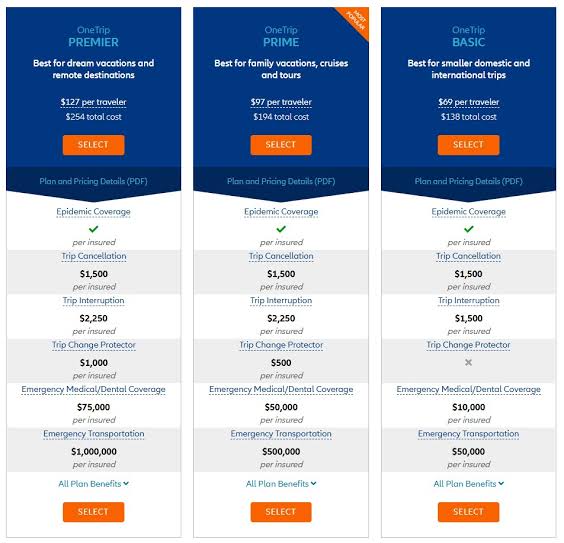
The modern era of travel insurance underwriting is defined by data analytics, risk unbundling, and direct-to-consumer digital distribution platforms. Modern specialty underwriters—including market options like Trawick International, Seven Corners, HTH Worldwide, WorldTrips, and Nationwide—can decouple pre-departure financial losses (trip cancellation) from post-departure catastrophic exposures (emergency medical and evacuation). By removing trip cancellation liabilities or applying higher policy deductibles, insurers can offer single-trip emergency medical limits ranging from $100,000 to $1,000,000 for a fraction of the cost of traditional bundled packages.
Key Categories of High-Limit, Low-Cost Policies
Understanding budget travel insurance requires categorizing policies by their structural mechanics, underwriting delivery methods, and target operational scope.
Standalone Travel Medical Plans
These policies prioritize post-departure medical and evacuation coverage while completely excluding pre-departure trip cancellation benefits. They offer extremely low premiums alongside high medical limits ($100,000 to $1,000,000+), making them ideal for travelers with refundable bookings or minimal prepaid costs.
High-Deductible Comprehensive Policies
These packages maintain full trip cancellation, interruption, medical, and baggage coverage, but incorporate voluntary medical deductibles ranging from $500 to $2,500. This voluntary risk retention lowers the base premium significantly while preserving high financial caps for major loss events.
Annual Multi-Trip Medical Policies
Designed for frequent travelers, these continuous 365-day plans cover an unlimited number of trips within a single policy year. They offer high medical limits per departure at a low annualized cost, subject to strict per-trip duration caps (typically 30 to 45 days per departure).
Post-Departure Comprehensive Plans
These plans cover trip interruption, travel delay, emergency medical treatment, and baggage loss during transit, but omit pre-departure trip cancellation protection. Excluding the pre-departure cancellation liability keeps baseline premiums low.
Real-World Scenarios and Decision Logic
Scenario 1: Independent Backpacker / Long-Term Remote Worker
A 28-year-old remote contractor spends three months traveling across Southeast Asia. Total prepaid arrangements are minimal ($400 in regional flights), but exposure to infectious disease, scooter accidents, and evacuations is elevated. The traveler selects a Standalone Travel Medical Plan setting insured trip cost to $0, securing a $250,000 medical cap and $500,000 evacuation cap for approximately $35 to $55 per month.
Scenario 2: Senior Traveler Seeking High Medical Coverage
A 68-year-old retiree travels to South America for 20 days. Age-based insurance pricing scales non-linearly, making standard packages expensive. By selecting a high-limit travel medical plan with a voluntary $1,000 medical deductible, the policy premium drops by over 35% to around $110 while preserving a $100,000 primary medical cap and a $500,000 evacuation limit.
Conclusion and Strategic Synthesis
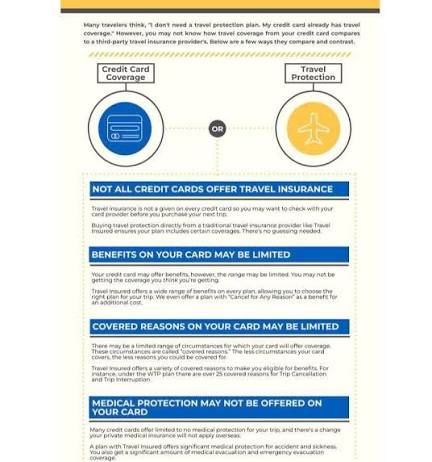
Selecting among the Top Cheap Travel Insurance Companies with High Coverage Limits demands a disciplined, analytical approach focused on unbundled policy structures, sub-limit transparency, primary indemnity mechanisms, and voluntary deductible leverage. Relying on baseline credit card perks or purchasing expensive bundled plans without analyzing underlying coverage needs results in either severe financial exposure or misallocated policy capital.
By isolating high-severity catastrophic risks (such as major medical emergencies and air evacuations) from low-severity trip inconveniences, travelers can secure $250,000 to $1,000,000 in protective coverage at a low upfront cost. Aligning policy parameters with travel frequency, destination profiles, and personal health baselines converts travel insurance from an impulse add-on into an efficient financial protection strategy.